
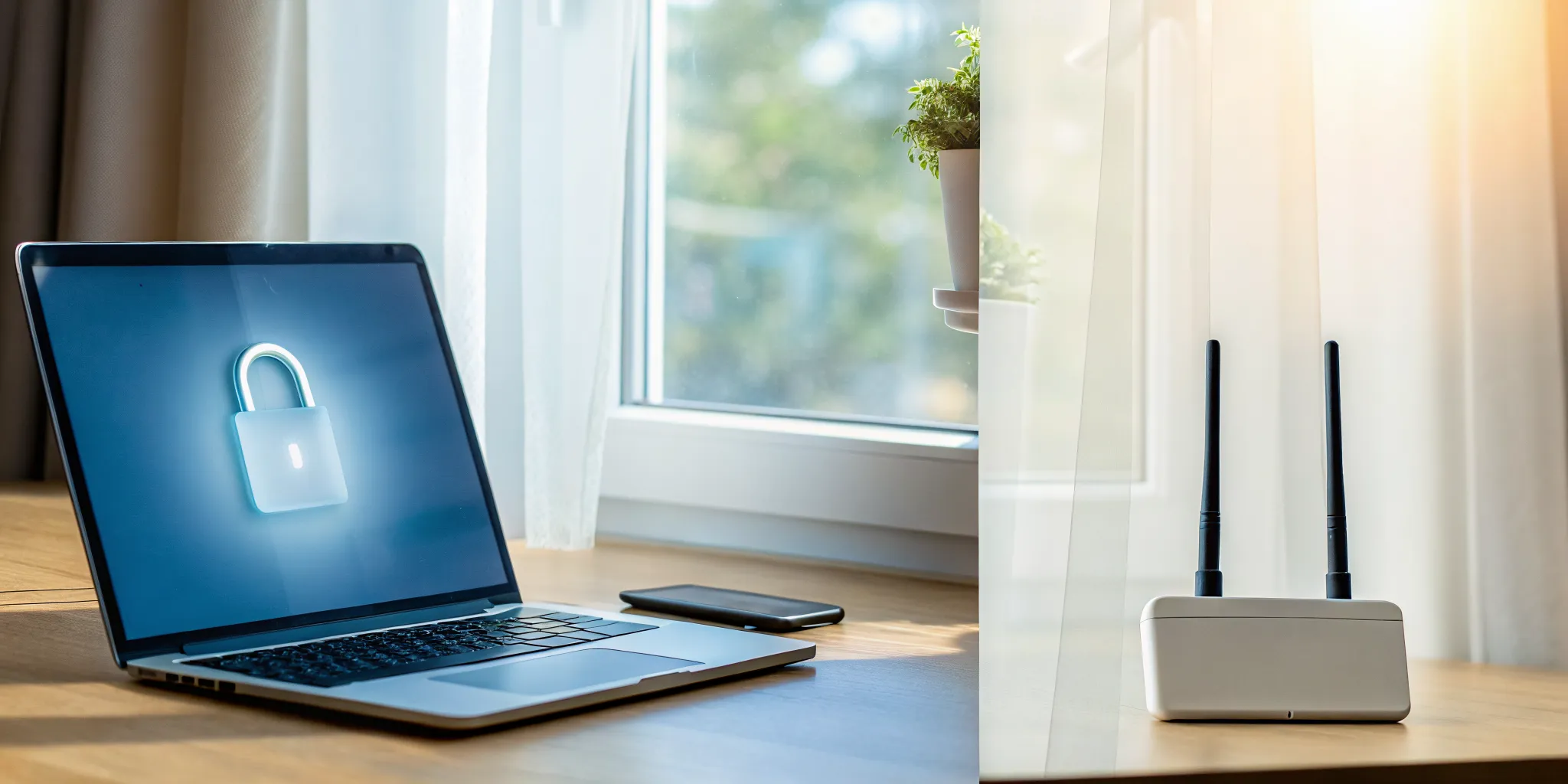
Your company’s security is only as strong as its weakest link, and in a remote setup, that weak link is often an employee’s home internet router. When your team works from home, you lose visibility into their network environment, creating significant blind spots. This forces us to confront the question: What Cybersecurity Risks Are Introduced by Remote and Hybrid Work? The most pressing dangers are often the ones you can’t see, like outdated router firmware, the use of unapproved software (Shadow IT), and personal IoT devices sharing the same network as a work laptop. These create unprotected pathways directly to your company’s sensitive data, bypassing your corporate firewall entirely.
Key Takeaways
- Empower Your Team with Security Training: Human error is a leading cause of data breaches, especially with remote teams. Consistent training helps your employees recognize phishing attempts, handle data safely, and understand their role in protecting the company, turning a potential vulnerability into a strong defense.
- Build a Defense for a Borderless Office: Your security can no longer be tied to a physical location. A layered strategy is essential, combining tools like VPNs for secure connections, endpoint protection for all devices, and multi-factor authentication (MFA) to create multiple barriers that protect data wherever your team works.
- Operate on a ‘Never Trust, Always Verify’ Principle: Adopt a Zero Trust security model where no user or device is automatically trusted. This approach requires strict verification for every access request, which contains threats and prevents unauthorized movement within your network. It’s a fundamental shift that secures your business by treating every connection as a potential risk.
What Are the Top Cybersecurity Risks for Remote Teams?
While remote and hybrid work models offer incredible flexibility for Tampa businesses, they also stretch your company’s security perimeter far beyond the office walls. Every home office, coffee shop, and airport lounge your employees work from becomes a potential entry point for cyber threats. This expanded attack surface means your risk profile has changed significantly. In fact, research shows that data breaches have skyrocketed by as much as 300% since the widespread adoption of remote work.
The biggest threats aren’t always sophisticated, external attacks. Often, they stem from simple, everyday vulnerabilities. These include employees connecting to unsecured home networks, using personal devices for work tasks, and accidentally falling for phishing scams that look more convincing than ever. The five most significant risks your remote team faces are data breaches from unauthorized access, targeted ransomware attacks, insider threats, the use of unapproved software (Shadow IT), and a general lack of physical security for devices and data outside the office. Understanding these specific vulnerabilities is the first step toward building a security strategy that protects your business no matter where your team is working.
Data Breaches and Unauthorized Access
When your team is distributed, controlling who accesses your data becomes much more complex. It’s no surprise that 63% of businesses have suffered data breaches directly related to remote work. Employees often operate on less secure home networks and may use personal devices that lack corporate-level security controls. This environment makes them prime targets for credential theft and phishing attacks. Research shows that remote workers are three times more likely to accidentally expose sensitive data than their in-office counterparts. Without a centralized and monitored network, it’s easier for unauthorized users to gain access, leading to costly breaches that can damage your reputation and your bottom line. Proactive cybersecurity measures are essential to close these gaps.
Ransomware Attacks on Remote Workers
Cybercriminals view remote employees as the path of least resistance into your corporate network. As a result, ransomware attacks have surged by 90% with the rise of remote work. Attackers target employees with sophisticated phishing emails, hoping a single click on a malicious link will give them the foothold they need to encrypt your company’s files and demand a hefty ransom. A successful attack can halt your operations for days or even weeks. Because remote workers are outside the company’s direct IT oversight, they may not recognize an attack until it’s too late. This makes having a robust data recovery plan and training your team to spot threats more critical than ever.
Insider Threats (Intentional and Accidental)
Not all threats come from the outside. Insider threats, which have increased by 58% since remote work became common, can be just as damaging. These threats are not always malicious; most are accidental. An employee might unintentionally email a sensitive file to the wrong person, use an unapproved file-sharing app, or save confidential data on an unsecured personal device. However, disgruntled employees can also intentionally leak data or sabotage systems. In a remote setting, it’s harder to monitor unusual behavior, making it easier for these actions to go unnoticed until significant damage is done. Implementing clear security policies and monitoring tools helps mitigate both accidental and intentional insider risks.
Shadow IT and Unapproved Software
“Shadow IT” refers to employees using software, applications, or devices without the knowledge or approval of your IT department. When an employee uses a personal laptop or downloads a new project management app to get their work done, they are engaging in Shadow IT. While often done with good intentions, this practice creates major security blind spots. These unmanaged devices and apps don’t have the security patches, access controls, or monitoring that your company-approved tools do. This opens the door for malware infections and data leaks. A comprehensive managed IT strategy helps you regain visibility and control over the technology your team uses every day.
Lack of Physical Security
Physical security is an often-overlooked aspect of remote work. In an office, you have controlled access, and devices are generally secure. At home, an employee’s work laptop could be lost, stolen, or used by a family member. Furthermore, many employees connect to their home internet, which may not be properly secured with strong passwords or encryption. Connecting to public Wi-Fi at a café or airport without a VPN is even riskier, as it exposes company data to anyone on that shared network. These physical and network vulnerabilities can easily lead to a data breach, reinforcing the need for strict device policies and mandatory security protocols for all employees, regardless of their location.
How Do Unsecured Home Networks Create Vulnerabilities?
An employee’s home network is one of the most common entry points for a cyberattack targeting your business. Unlike a corporate office with layered defenses, a home network is often a mix of personal and work devices, weak security settings, and outdated hardware. This creates a direct, unprotected bridge to your company’s sensitive data. When an employee connects to your systems from an insecure home network, they are essentially extending your company’s digital perimeter into an uncontrolled environment. This is why a robust cybersecurity plan must address the risks that begin long before an employee even logs into your VPN.
Weak Passwords and Default Router Settings
Many home internet routers are installed and then forgotten. This means they are often left with the default administrator username and password printed on the sticker, like “admin” and “password1234.” Hackers know these default credentials and use automated software to scan for vulnerable routers. Once they gain access, they control the entire network. They can redirect an employee to a fake login page, intercept sensitive company information, or install malware. It’s the digital equivalent of a thief finding the front door key still under the welcome mat. This simple oversight can give an attacker complete control over all data passing through the network.
Outdated Firmware and Missing Encryption
Just like your laptop or phone, your router’s software, called firmware, needs regular updates. These updates often contain critical patches for newly discovered security flaws. Since most people never log into their router’s settings, this firmware is rarely updated, leaving the network exposed to known exploits. An outdated router is an open invitation for an attack. Furthermore, older or improperly configured routers may use weak encryption standards. This allows a nearby attacker to easily crack the Wi-Fi password and monitor all the traffic passing through the network, including emails, passwords, and confidential company files.
Shared Networks and IoT Devices
A typical home network isn’t just used for a work laptop. It’s a crowded space shared with personal phones, smart TVs, voice assistants, and security cameras. Research shows that the growing number of home IoT devices creates a massive and unprecedented attack surface. Each of these devices is a potential weak link. For example, a hacker could compromise a poorly secured smart TV and then move across the network to access the work laptop connected to the same Wi-Fi. This shared environment makes it incredibly easy for malware to spread from a personal device to a work machine, completely bypassing your company’s security measures.
How Do Personal Devices Impact Your Company’s Security?
When your employees use their personal laptops, tablets, and phones for work, it introduces a complex set of security challenges. While a Bring-Your-Own-Device (BYOD) policy can offer flexibility, it also expands your company’s attack surface. Personal devices rarely have the same level of protection as company-managed equipment, creating direct entry points for cyber threats into your business network and data.
The Risks of Bring-Your-Own-Device (BYOD)
Allowing employees to use personal devices for work might seem cost-effective, but it comes with significant security trade-offs. Research shows that insider threats have climbed dramatically with the rise of remote work, largely because personal devices lack corporate security oversight. When an employee accesses company data on a personal phone or laptop, that device becomes a potential gateway for a breach. Without centralized control, you have no way of knowing if that device is secure, who else uses it, or what other applications are running on it. This is why a clear policy and strong cybersecurity measures are non-negotiable for any company embracing a BYOD model.
Unmanaged Devices and Missing Security Patches
A core problem with personal devices is that they are typically unmanaged. Your IT team, or provider, can’t enforce critical security updates or configurations. An employee might delay a software update on their personal laptop for weeks, leaving it vulnerable to known exploits that attackers are actively targeting. They might also connect to an unsecured public Wi-Fi at a coffee shop or use a home network with a default router password. Each of these actions creates a weak link in your security chain. A managed IT support plan ensures that every device accessing your network, whether personal or company-owned, is properly patched and monitored.
Malware from Personal App Downloads
Personal devices are filled with personal apps, and that’s where a lot of the danger lies. An employee might download a seemingly harmless game or utility app that contains hidden malware. Once that malware is on the device, it can potentially access any corporate data stored on or accessed through it, including emails, client files, and login credentials. Phishing attacks are also a major concern, as a single mistaken click on a personal device can compromise your entire network. Implementing robust endpoint protection, like that offered through Microsoft 365, is crucial for isolating and neutralizing these threats before they can spread from a personal device to your business systems.
What Common Cyber Threats Do Remote Employees Face?
When your team works from home, your company’s digital footprint expands far beyond the office walls. Each remote employee’s setup, from their home network to their personal laptop, becomes a potential entry point for cybercriminals. Attackers are well aware of this shift and have tailored their methods to exploit the unique vulnerabilities of a distributed workforce. They are no longer just knocking on the front door of your office network; they are now trying the windows and back doors of every employee’s home.
Understanding these specific threats is the first step toward building a defense that works for a modern, flexible team. The most common attacks aren’t always sophisticated hacks but often prey on human error and insecure connections. These include deceptive emails designed to steal credentials, attacks that intercept data on public Wi-Fi, and psychological manipulation to trick employees into giving away access. Even the convenient apps your team uses to collaborate can become a source of accidental data leaks if they aren’t properly managed. Protecting your Tampa business means securing every endpoint with comprehensive IT services, no matter where it is.
Phishing and Spear Phishing Attacks
Phishing remains one of the most effective ways criminals gain access to business networks. These attacks use deceptive emails, texts, or messages that look like they are from a legitimate source, like a bank, a software vendor, or even your own HR department. The goal is to trick an employee into clicking a malicious link or handing over sensitive information like passwords or financial details. Spear phishing is a more targeted and dangerous version, where attackers research their victim to craft a highly personalized and convincing message.
Because remote employees often operate with less direct oversight and may mix personal and work communications, they are prime targets. An urgent-looking email about a “password reset” or “unusual login activity” can easily fool a distracted employee working from their kitchen table. A robust cybersecurity plan must include advanced email filtering and ongoing employee training to help your team spot and report these threats before they cause a breach.
Man-in-the-Middle (MitM) Attacks
A Man-in-the-Middle (MitM) attack happens when a cybercriminal secretly positions themselves between a user and a web service, intercepting the communication. They can steal data, credentials, and sensitive files without either party knowing. This is a major risk for remote employees who might connect to public Wi-Fi at a coffee shop, airport, or hotel. These networks are often unsecured, making it easy for an attacker on the same network to spy on traffic. Even an employee’s home network can be vulnerable if it isn’t properly configured.
For example, an attacker could set up a fake Wi-Fi hotspot named “Free_Cafe_WiFi.” When your employee connects, the attacker can capture every piece of data they send, from their login for your company’s cloud server to the contents of a confidential client email. The best defense against this is to enforce the use of a Virtual Private Network (VPN), which encrypts all internet traffic and creates a secure tunnel for data.
Social Engineering Tactics
Social engineering is the art of psychological manipulation. Instead of exploiting technical vulnerabilities, attackers exploit human trust to gain access to systems or data. Phishing is one type, but it also includes phone calls (vishing) and text messages (smishing). An attacker might call an employee pretending to be from your IT helpdesk, creating a false sense of urgency to convince them to share their password or install a piece of “required” software that is actually malware.
These tactics are especially effective against remote workers who can’t just walk over to a colleague’s desk to verify a strange request. The isolation makes them more susceptible to believing a convincing story. The most important thing your organization can do is implement regular security awareness training. As part of our managed IT support, we help businesses train their teams to recognize and resist these manipulative tactics, turning your employees into a strong line of defense.
Data Leaks via Unsecured Apps
The convenience of cloud-based apps has been a huge benefit for remote teams, but it also introduces a risk known as “Shadow IT.” This happens when employees use unapproved software, apps, or services to handle company data. For instance, an employee might use a free online file converter to change a document format, unknowingly uploading a sensitive client contract to an unsecured server. These unvetted tools often lack the security controls your business requires, creating a backdoor for data leaks.
Research shows that remote workers are three times more likely to accidentally expose data than office-based employees. These small, unintentional actions can lead to massive compliance fines and reputational damage. The solution is to establish clear policies on approved software and use secure, centralized platforms like Microsoft 365 for all work. Implementing Data Loss Prevention (DLP) tools can also automatically block sensitive information from being shared outside your secure environment.
How Does a Hybrid Model Change Your Security Needs?
A hybrid work model offers great flexibility, but it also creates a constantly shifting security perimeter that stretches far beyond your office walls. Unlike a fully remote or fully in-office setup, your team’s devices and data are always on the move. One day an employee is on the secure office network, and the next they’re at a coffee shop using public Wi-Fi. This constant transition between environments introduces unique security challenges that require a more dynamic and layered approach. Your security strategy can no longer be tied to a physical location; it must be tied to the user and the device, wherever they go. This means rethinking how you handle network access, device management, and data compliance to protect company assets from a much wider range of threats.
Moving Between Secure and Unsecured Networks
When employees work from the office, they are protected by your corporate firewall and secure network configurations. The moment they leave, that protection is gone. In a hybrid model, employees regularly access corporate systems from home networks, public Wi-Fi, and other unsecured environments. Each new connection point is a potential entry for attackers. This is why a Virtual Private Network (VPN) is essential. A VPN creates an encrypted tunnel for all internet traffic, effectively extending your secure office network to any location. We help Tampa businesses implement and enforce always-on VPN policies, ensuring every connection to your company’s resources is private and protected, no matter where your team is working.
Maintaining Device Security Between Office and Home
A company laptop is a container for sensitive data, and its security risk changes with its location. At home, it might connect to a network shared with personal IoT devices or be used by a family member, creating new vulnerabilities. Research shows that remote workers are significantly more likely to accidentally expose data than their in-office counterparts. To counter this, you need robust endpoint security that travels with the device. Solutions like Endpoint Detection and Response (EDR) and Mobile Device Management (MDM) allow you to monitor, manage, and secure laptops and phones remotely. With our cybersecurity services, we can lock or wipe a lost device, enforce security updates, and block threats before they compromise your network.
Managing Compliance and Data Privacy Across Locations
For businesses in regulated industries like healthcare or law, maintaining compliance is non-negotiable. A hybrid model complicates this, as you must ensure data privacy standards like HIPAA are met even when employees are working from their kitchen tables. You have to balance cybersecurity measures with employee privacy while adhering to all data protection laws. This requires both clear policies and the right technology. For example, Data Loss Prevention (DLP) tools can be configured to prevent sensitive client information or patient records from being copied to a USB drive or uploaded to a personal cloud account. Our IT consulting helps Tampa firms build a compliant framework that protects sensitive data across every work environment.
Is Your Remote Work Policy Creating Security Gaps?
A remote work policy is more than just a document; it’s your first line of defense in a distributed work environment. However, a policy that is vague, outdated, or poorly enforced can create significant security vulnerabilities. If your rules aren’t clear, your team is left to make their own judgment calls, often prioritizing convenience over security. This can lead to inconsistent practices across your organization, leaving doors open for cybercriminals. For example, one employee might use a secure, updated personal laptop while another uses an old family tablet with no antivirus software.
Effective remote work policies are specific, regularly updated, and actively managed. They don’t just state rules; they explain the “why” behind them and provide clear, actionable steps for employees to follow. A strong policy acts as a roadmap, guiding your team on everything from connecting to public Wi-Fi to handling sensitive client data from home. Without this guidance, you’re essentially hoping for the best. At IGTech365, we help Tampa businesses develop and enforce robust cybersecurity policies that close these common gaps and protect your operations, no matter where your team is working.
Unclear BYOD and Acceptable Use Policies
When employees use their own laptops, phones, and tablets for work, it’s called Bring-Your-Own-Device (BYOD). While it offers flexibility, it can be a major security headache without a clear Acceptable Use Policy (AUP). If your policy doesn’t define which devices are permitted, what security software is required, and how company data should be handled, you lose control. Research shows that insider threat incidents, many of which are accidental, are closely linked to remote work due to unsecured personal devices. A strong AUP removes the guesswork by setting firm boundaries, ensuring every device that connects to your network meets your security standards.
Inconsistent Software and Patch Updates
Software updates, or patches, are critical because they often fix newly discovered security flaws. When your team is in the office, your IT department can manage these updates centrally. But with a remote workforce, the responsibility often falls on the individual employee, who might delay or forget to install them. Attackers actively search for devices running outdated software because they know these old weaknesses are easy to exploit. Your remote work policy must mandate that all software and operating systems are kept current. Better yet, using a managed IT support service can automate patch management, ensuring every company device is protected without relying on employee action.
Weak or Reused Passwords
Passwords are the keys to your digital kingdom, but your team members are only human. It’s common for people to reuse passwords across multiple accounts or create simple ones that are easy to remember and just as easy for criminals to guess. This habit becomes especially dangerous in a remote setting, where employees access company data from various networks and devices. Phishing attacks, which trick users into revealing their credentials, remain one of the biggest threats to hybrid work. A single compromised password can give an attacker access to your entire network. Your policy should enforce strong, unique passwords and mandate multi-factor authentication (MFA) as a non-negotiable security layer.
No Defined Incident Response Plan
What happens when an employee clicks a malicious link or loses a work laptop? If they don’t know what to do next, a small problem can quickly escalate into a full-blown data breach. An Incident Response Plan (IRP) is a clear, step-by-step guide for identifying, containing, and resolving a security incident. Your remote work policy must include a simplified version of this plan, telling employees exactly who to contact and what immediate actions to take. Having a documented plan ensures a swift and organized response, which is essential for minimizing damage, meeting compliance regulations, and getting your business back on track.
What Are the Cybersecurity Best Practices for Employees?
Your employees are your first and most important line of defense against cyber threats. While firewalls and security software are essential, they can’t stop an attacker who has been willingly handed the keys. Building a security-conscious culture starts with empowering your team with clear, actionable habits. These five practices are the foundation of a secure remote and hybrid work environment. When your team consistently follows these steps, you dramatically reduce your company’s risk profile and protect your sensitive data from common threats.
Use a VPN for Every Connection
Think of a Virtual Private Network (VPN) as a secure, encrypted tunnel for your internet connection. When an employee works from a coffee shop, airport, or even their home, their internet traffic is often exposed on public or unsecured networks. A VPN encrypts all the data traveling between their device and your company’s network, making it unreadable to anyone trying to snoop. This is critical for protecting login credentials, client information, and financial data. Providing a VPN is a non-negotiable for any business with remote workers. It’s a simple tool that closes a major security gap, ensuring all connections to your business resources are private and protected, no matter where your team is working.
Enable Multi-Factor Authentication (MFA)
Passwords get stolen. It’s an unfortunate reality. Multi-factor authentication is the single most effective way to protect an account even after a password has been compromised. MFA requires a second piece of information (a code from a phone app, a text message, or a fingerprint) in addition to a password. This extra step makes it exponentially harder for an unauthorized person to gain access. Your team should enable MFA on every critical application, especially email, financial software, and any system holding client data. As a Microsoft Solutions Partner, we help Tampa businesses implement MFA across their Microsoft 365 accounts, securing the central hub of their daily operations.
Keep All Devices and Software Updated
Those constant notifications to update your software aren’t just annoying reminders; they are critical security alerts. Many cyberattacks exploit known vulnerabilities in outdated applications and operating systems. When a developer releases an update or “patch,” they are essentially fixing a broken lock that they discovered. Delaying these updates leaves your devices vulnerable to attacks that are often automated to scan for these specific weaknesses. A robust managed IT support plan includes patch management, ensuring that all company devices, whether in the office or at home, are consistently updated without disrupting your employees’ workflow. This simple act of maintenance is a powerful defense.
Spot and Report Phishing Attempts
Phishing remains one of the most common ways attackers get inside a business. These deceptive emails or messages are designed to trick employees into clicking malicious links or revealing sensitive information. Train your team to spot the red flags: urgent or threatening language, unexpected attachments, suspicious sender addresses, and requests for credentials. The most important step is to not just delete the email, but to report it immediately to your IT department. Reporting a phishing attempt allows your security team to block the sender, warn other employees, and check if anyone else was targeted, containing the threat before it can spread.
Practice Safe Data Handling and File Sharing
When employees work from home, the line between personal and professional can blur. It might seem harmless to email a work file to a personal account or use a consumer file-sharing service to collaborate. However, these actions move sensitive company data outside of your secure environment, creating compliance risks and data leaks. Your policy should be clear: all company data must be stored and shared using approved, secure platforms like Microsoft Teams and SharePoint. Using a secure, centralized system ensures you maintain control over your data, can track access, and remain compliant with industry regulations like HIPAA.
How Can Your Business Reduce Remote Work Cyber Risk?
Protecting your business from cyber threats in a remote or hybrid environment requires more than just a good firewall. It demands a proactive, layered security strategy that addresses vulnerabilities across your devices, networks, and people. Shifting your mindset from reactive defense to proactive prevention is the key. Instead of waiting for a breach to happen, you can implement a framework of tools and policies that significantly reduces your risk from the start. For many Tampa businesses, the transition to remote work happened quickly, often leaving security as an afterthought. Now is the time to address those gaps before they become costly incidents.
A comprehensive cybersecurity plan combines several key elements working in concert. This includes verifying every user, securing every device, controlling access to sensitive data, and empowering your employees with the knowledge to spot threats. By adopting these practices, you create a resilient security posture that protects your business operations, whether your team is in the office, at home, or on the go. A single breach can lead to thousands in recovery costs, reputational damage, and operational downtime. Investing in a robust security framework isn’t just an IT expense; it’s a fundamental business continuity strategy. Let’s walk through the essential steps you can take to secure your modern workforce.
Enforce a Zero Trust Security Model
The old “castle-and-moat” approach to security, where everything inside the network was trusted, is no longer effective. A Zero Trust model operates on a simple but powerful principle: never trust, always verify. This means no user or device is granted automatic access to your company’s resources, even if they are already connected to your network. Every single access request must be authenticated and authorized, every time.
This approach is essential for securing remote devices and connections. By implementing Zero Trust, you ensure that every user and device is verified before accessing applications and data. This framework helps prevent unauthorized users from moving through your network if they manage to breach one account, containing threats before they can spread. It’s a fundamental security shift that treats every access point as a potential risk.
Deploy Endpoint Detection and Response (EDR)
Think of every laptop, smartphone, and tablet your team uses as an “endpoint” and a potential entry point for cyberattacks. Traditional antivirus software is no longer enough to protect these devices. Endpoint Detection and Response (EDR) solutions are critical for protecting your data and users in a hybrid work model. EDR acts like a 24/7 security guard for each device, continuously monitoring for suspicious activity.
Unlike antivirus, which mainly looks for known threats, EDR identifies unusual behaviors that could signal an attack in progress. If a threat is detected, EDR tools can automatically respond in real-time, for instance, by isolating a compromised laptop from the network to stop a threat from spreading. As part of a Managed IT Support plan, EDR provides the visibility and control needed to protect your team’s devices anywhere.
Implement Identity and Access Management (IAM)
A core part of securing your remote workforce is ensuring only the right people can access the right information. This is the job of Identity and Access Management (IAM). A crucial component of any IAM strategy is Multi-Factor Authentication (MFA), which adds a simple but powerful layer of security to every login. MFA requires users to provide two or more verification factors to gain access, such as a password and a code sent to their phone.
Implementing MFA is one of the most effective steps you can take to prevent unauthorized access, blocking the vast majority of account compromise attempts. Modern IAM solutions, including those within Microsoft 365, allow you to manage user identities and enforce access policies centrally, ensuring consistent security across all your applications and platforms.
Use Data Loss Prevention (DLP) and SIEM Tools
Even with strong access controls, you need tools to protect your sensitive data from being lost or stolen. Data Loss Prevention (DLP) tools act as a safeguard for your information. They can identify, monitor, and block the unauthorized transfer of sensitive data, such as financial records or customer information. For example, a DLP policy can prevent an employee from accidentally emailing a spreadsheet with client data to an external address.
To get a complete view of your security landscape, you can pair DLP with Security Information and Event Management (SIEM) tools. A SIEM system collects and analyzes security alerts from all your hardware and software, providing a single dashboard to monitor for threats. This helps your IT team spot patterns and respond to incidents more effectively, protecting your data and minimizing the need for data recovery services.
Schedule Regular Cybersecurity Awareness Training
Your employees are your first and most important line of defense against cyber threats, but they need the right training to be effective. Technology alone cannot stop every attack, especially social engineering tactics like phishing. Regular security awareness training is vital for teaching your team how to recognize and respond to these threats, particularly in a hybrid workplace where they connect from various networks.
This training should be an ongoing process, not a one-time event. Effective programs cover topics like spotting phishing emails, creating strong and unique passwords, practicing safe web browsing, and knowing how to report a security incident. Using phishing simulations can also help test your team’s awareness in a controlled environment, turning potential security weaknesses into learning opportunities. These programs are a key part of our comprehensive IT services.
How to Build a Layered Security Strategy for Your Team
Relying on a single firewall or antivirus program to protect your business is like locking your front door but leaving all the windows wide open. A modern, layered security strategy, often called “defense-in-depth,” creates multiple barriers between your data and cyber threats. If one layer fails, another is already in place to stop the attack. For businesses with remote or hybrid teams, this multi-layered approach isn’t just a best practice; it’s essential for survival. When your team works from various locations, using different networks and devices, your company’s traditional security perimeter disappears.
This is where a layered strategy becomes critical. It involves combining technology, policies, and employee training to build a resilient defense that protects your team wherever they work. This comprehensive approach moves beyond a simple perimeter defense and secures your company’s most critical assets: its data and its people. By implementing layers of protection, you create a security posture that is much more difficult for attackers to penetrate, significantly reducing your risk of a costly breach. It’s about making sure your security follows your data, not just your office walls.
Key Parts of a Layered Security Framework
A strong layered security framework is built from several integrated components that work together. The goal is to protect your identities, devices, and data at all times. A complete strategy includes:
- Zero Trust Network Access (ZTNA): This model operates on a “never trust, always verify” principle. It requires strict verification for every person and device trying to access resources on your network, regardless of whether they are inside or outside the perimeter. Implementing multi-factor authentication (MFA) is a foundational step in any Zero Trust strategy.
- Endpoint Security: Every laptop, phone, and tablet is a potential entry point for an attack. Endpoint security solutions monitor these devices for malicious activity and can isolate them from the network to prevent a threat from spreading.
- Data Loss Prevention (DLP): DLP tools enforce policies to ensure sensitive data isn’t accidentally or maliciously shared. This can block employees from emailing client lists to a personal account or uploading financial records to an unapproved cloud drive.
- Regular Security Awareness Training: Your employees are your first line of defense. Ongoing training teaches them how to spot phishing emails, use strong passwords, and handle data safely, turning a potential weakness into a security asset.
How IGTech365 Secures Remote Teams in Tampa
At IGTech365, we design, implement, and manage layered security strategies for businesses across the Tampa Bay area. We don’t just sell you software; we build a comprehensive security posture tailored to your specific operational needs and industry compliance requirements. For example, for a local law firm, this might involve deploying Microsoft Defender for Endpoint on all attorney laptops and configuring Data Loss Prevention policies in Microsoft 365 to protect sensitive case files.
Our managed IT support includes 24/7 monitoring and proactive threat hunting. We use advanced tools to test your defenses, patch vulnerabilities before they can be exploited, and ensure your security layers are working in harmony. By partnering with us, you get a dedicated team of certified experts who handle the complexities of cybersecurity, allowing you to focus on running your business securely and efficiently.
Related Articles
- The 8 Best Remote Computer Access Software Tools | IGTech365
- Why is Information Security Important for Remote Employees? | IGTech365
- A Guide to Outsourced IT Services for Small Business | IGTech365
Frequently Asked Questions
We’re a small business. Do we really need this level of security? That’s a question I hear a lot, and it’s a valid one. It’s easy to think that cybercriminals only target large corporations, but the opposite is often true. Attackers frequently go after small and mid-sized businesses precisely because they expect security to be less robust. For them, it’s a numbers game. A successful attack on your business is just as profitable as any other. Think of security not as a major corporate expense, but as essential insurance that protects your operations, your client data, and your reputation.
What’s the single most important security step we can take right now? If you do only one thing after reading this, it should be to enable multi-factor authentication (MFA) on every account possible, especially your email. Passwords can be stolen, guessed, or leaked in a data breach. MFA is your safety net. By requiring a second step, like a code from a phone app, you make it nearly impossible for a criminal to access your account even if they have your password. It’s a simple action that provides a massive security improvement.
My team isn’t very technical. How can I get them to actually follow security rules? This is a huge challenge, and it’s not about turning your team into security experts. The key is to make security as simple and seamless as possible. This involves a two-part approach. First, use tools that automate security, like managed software updates that run in the background. Second, implement ongoing training that is engaging and relevant. Short, regular sessions and simulated phishing tests are far more effective than a single, boring annual seminar. The goal is to build good, secure habits over time.
Is using personal phones and laptops for work really that risky if we have a password policy? Yes, it is. A password policy is a great start, but it only protects the login. It doesn’t protect the device itself. A personal laptop might be running outdated software with known security holes, or it could have malware from a game a family member downloaded. When your employee accesses company data from that device, you have no control over where that data goes or what risks it’s exposed to. You’re essentially extending your company’s network into an environment you cannot see or manage.
What does “layered security” look like in practice for a company like mine? It’s less complicated than it sounds. Think of it like securing your home. You lock the front door (your firewall), but you also have locks on the windows (endpoint security on laptops) and maybe a security camera (network monitoring). For your business, a layered strategy means combining several defenses. For example, an employee uses a VPN to create a secure connection (layer one), logs in with a password and MFA (layer two), and their device is monitored for threats in real-time (layer three). If one layer fails, the others are there to stop an attack.