
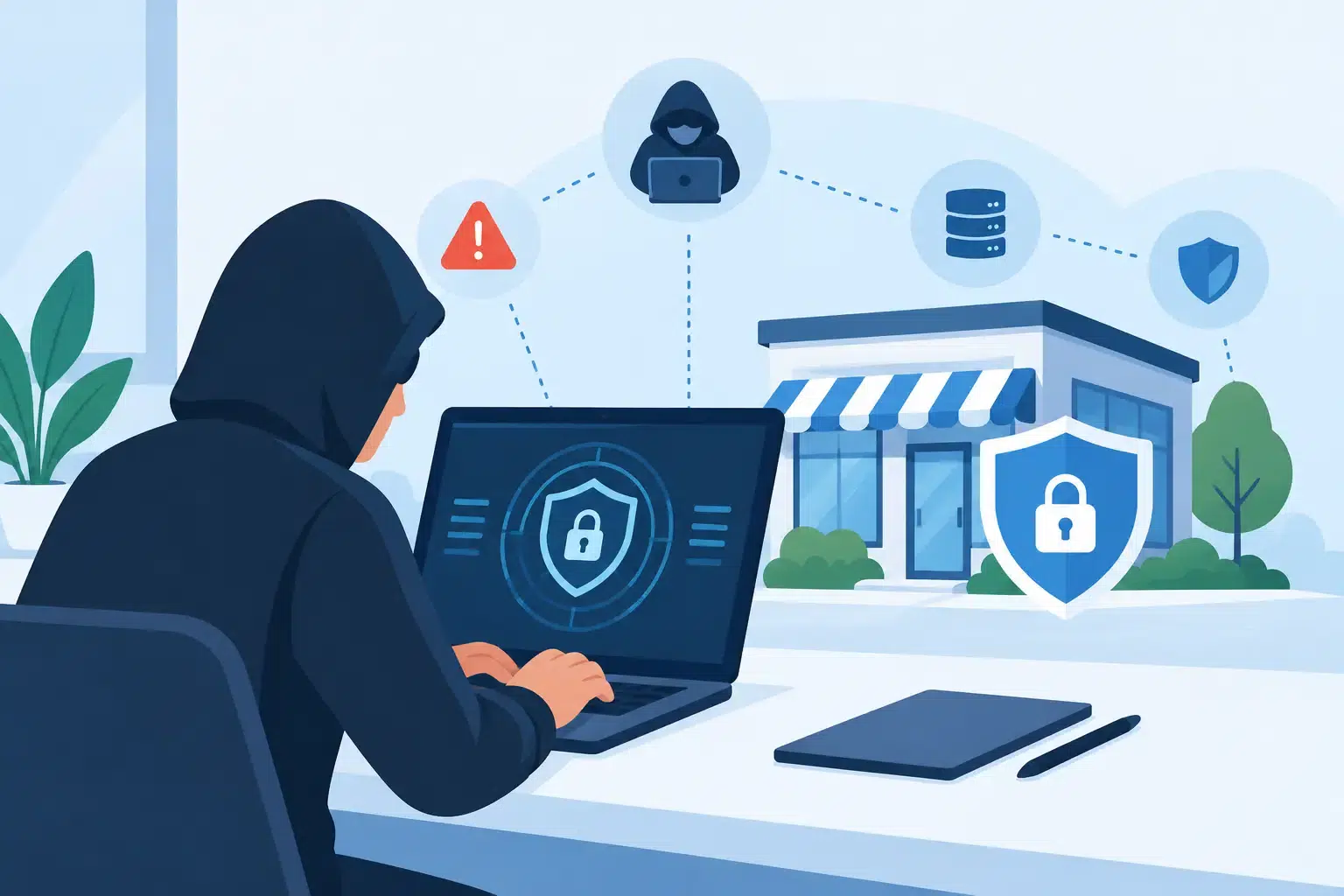
A phishing email reaches an employee at 8:12 a.m. A familiar-looking Microsoft 365 login page appears, the password is entered, and an attacker has a starting point inside the business. The question is not whether your team has antivirus software or a firewall. It is whether those controls would actually stop someone using the same paths a criminal would use. Penetration testing for small business answers that question before a real incident forces the issue.
For a growing Florida business, a security failure rarely stays in the IT department. It can stop construction crews from accessing plans, delay payroll, expose client files at a law firm, interrupt patient scheduling, or make a manufacturer unable to process orders. A penetration test gives leadership a clear view of the gaps that could turn a normal workday into a costly interruption.
What a Penetration Test Actually Does
A penetration test is an authorized, controlled attempt to find and safely validate security weaknesses. A qualified tester looks at your environment from the perspective of an attacker, then documents what could be accessed, changed, or disrupted.
That is different from a vulnerability scan. A scan is useful because it identifies known issues, such as outdated software, exposed services, or missing patches. But it is largely automated and can produce a long list that does not tell you which findings create meaningful business risk. Penetration testing adds human judgment. It tests whether smaller weaknesses can be combined to gain access to sensitive data, administrative accounts, or critical systems.
A well-scoped test may assess your external network, office Wi-Fi, cloud applications, Microsoft 365 configuration, employee phishing resistance, or internal network segmentation. The scope should match how your business operates and what would hurt most if it were compromised.
Why Small Businesses Are Tested by Criminals
Small businesses are not too small to be targeted. They are often easier to target because security responsibilities are spread across office staff, internal IT, software vendors, and a collection of tools purchased as needs arose. That is understandable. It also creates openings.
Attackers commonly look for exposed remote access tools, weak or reused passwords, outdated firewalls, poorly secured cloud accounts, unpatched servers, and email settings that make impersonation easier. They may also use a compromised vendor account or a convincing invoice email rather than trying to break through a technical defense directly.
The goal is usually practical: steal money, collect data, deploy ransomware, or use one business as a path to a larger customer or partner. An accounting firm with tax records, a healthcare practice with protected health information, and a contractor with project documentation all hold information worth protecting.
Penetration testing puts those risks into business terms. Instead of hearing that a system has a technical vulnerability, leadership can understand the likely consequence: an attacker could impersonate a user, access financial records, reach backup systems, or interrupt operations.
When Penetration Testing for Small Business Makes Sense
Annual testing is a reasonable baseline for many organizations, especially those that handle client data, payment information, regulated records, or intellectual property. However, timing should follow change and risk, not just the calendar.
Testing is especially valuable after a cloud migration, a Microsoft 365 rollout, a new office or network installation, a merger, a major application launch, or a significant firewall change. These projects often improve the business, but they can introduce overlooked permissions, temporary workarounds, or systems that were never fully removed from public access.
A test also makes sense when your business is pursuing cyber insurance, responding to a client security questionnaire, or preparing for compliance expectations such as HIPAA. It does not replace a formal compliance program, but it provides evidence that you are actively looking for and addressing security gaps.
For businesses with limited budgets, a focused assessment can be more useful than an overly broad engagement. If email compromise is your biggest concern, prioritize Microsoft 365 identity controls, multi-factor authentication, conditional access, and phishing exposure. If you rely on an office network, production equipment, or on-premises servers, start with external access and internal network segmentation.
The Testing Scope Should Protect Work, Not Disrupt It
Business owners are right to ask whether a test could interrupt operations. An experienced provider should plan around that concern from the start. The engagement should define what systems can be tested, which techniques are off limits, when testing can occur, and who must be contacted if a serious issue is found.
For example, a healthcare practice may need testing that avoids affecting clinical systems during patient hours. A manufacturer may require special care around industrial devices. A law firm may want validation of external access and document permissions without allowing any sensitive files to leave the environment. These are not obstacles to testing. They are scope decisions that protect the business while producing useful results.
The best tests are not theatrical attempts to cause damage. They are disciplined exercises with clear rules of engagement, evidence handling standards, and a defined escalation process. If a tester discovers access that could expose sensitive information, your designated contact should know promptly, not weeks later in a final report.
What a Useful Report Looks Like
A penetration test report should not leave you with 70 pages of technical language and no clear next step. It should separate urgent weaknesses from lower-priority improvements and explain why each finding matters to your operations.
Look for a report that identifies the affected system, describes the evidence behind the finding, explains the potential impact, assigns a realistic severity level, and provides practical remediation guidance. The report should also distinguish between a theoretical issue and a weakness the tester successfully used to gain further access.
Prioritization matters because not every finding deserves the same response. An exposed administrator account or a path to ransomware deserves immediate attention. A lower-risk configuration issue may be scheduled alongside normal maintenance. Good security planning is not about fixing everything at once. It is about reducing the risks that could cause the greatest disruption first.
After remediation, retesting is often worth including. It confirms that the fix worked and that a change intended to close one gap did not create another. That verification is particularly valuable for insurance documentation, client requirements, and regulated environments.
Common Gaps a Test Can Expose
Most small business findings are not exotic. They are everyday oversights that become dangerous when combined. A former employee account may still exist. Multi-factor authentication may be optional for some users. A firewall rule created for a vendor years ago may remain open. Backups may exist but be reachable from the same network an attacker could encrypt.
Cloud systems deserve the same attention as servers in the office. Microsoft 365 can be well protected, but only when identity, sharing, mailbox forwarding, device management, and alerting are configured intentionally. A penetration test can reveal whether attackers could exploit weak authentication, permissive sharing settings, or compromised credentials to reach company email and files.
Physical access also has a place in some assessments. An unlocked network closet, an open guest Wi-Fi network, or a device plugged into an unattended conference room can create an entry point. Whether physical testing is appropriate depends on your location, staffing, and industry, but it should not be dismissed automatically.
Penetration Testing Is One Part of Ongoing Protection
A test is a snapshot. It shows where security stands at a specific point in time. New employees, software updates, cloud changes, and evolving threats mean the environment will not stay still.
That is why testing works best alongside managed patching, 24/7 monitoring, endpoint protection, secure backups, phishing training, access reviews, and an incident response plan. A business also needs someone accountable for turning findings into completed work, rather than filing the report away until the next audit or insurance renewal.
At IGTech365, that accountability means connecting security findings to the systems your team depends on every day: email, cloud files, Wi-Fi, line-of-business applications, backups, and network access. The purpose is not to create another vendor report. It is to reduce exposure without creating more work for your staff.
A penetration test should leave your business with more than a list of flaws. It should give you a practical order of operations, clear ownership, and confidence that the next security decision supports uninterrupted work. If you are unsure where your greatest exposure sits, a focused IT health check or a 15-minute strategy conversation can help define the right starting point.