
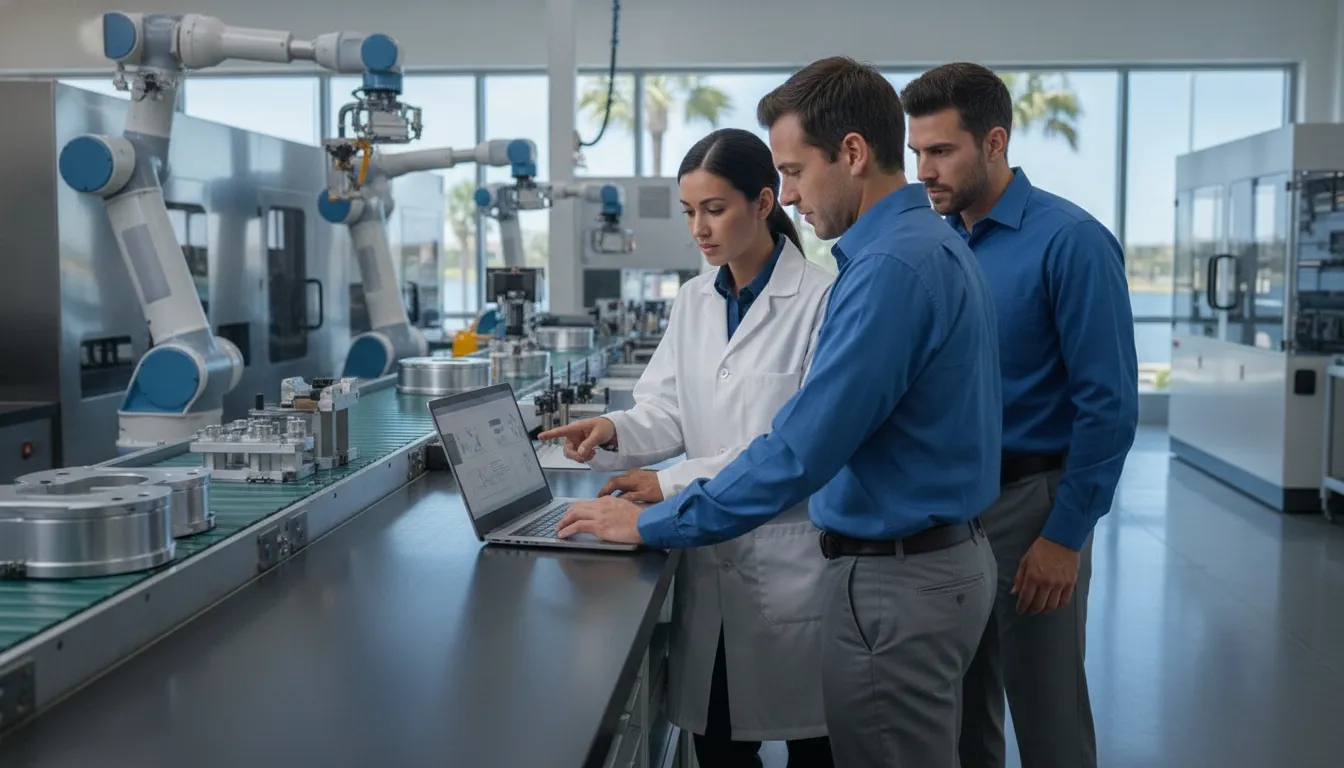
A manufacturing floor is not just another office with more equipment. ERP and MRP systems, production networks, industrial controls, and connected machines must work together while orders, quality requirements, and supply commitments keep moving. A small IT issue can become a stalled line, a damaged batch, or a missed shipment.
Why Do Manufacturing Companies Need Specialized IT Support? Because manufacturers need IT expertise that connects business systems with operational technology, protects sensitive production data, and keeps downtime as close to zero as practical. CISA notes that downtime can carry high financial costs and disrupt interconnected supply chains, while IGTech365 estimates that downtime can cost businesses about $9,000 per minute.
That responsibility goes beyond resetting passwords or replacing laptops. It requires an understanding of how plant-floor systems behave, how cybersecurity can affect production, and how support can prevent disruptions instead of reacting after the line stops. The first step is seeing why general office IT approaches often fall short in a manufacturing environment.
If your plant-floor systems, production networks, or connected equipment depend on reliable IT, talk with a specialized manufacturing IT partner today.
Why Do Manufacturing Companies Need Specialized IT Support?
A manufacturing facility is not simply an office with larger equipment. Its technology environment combines business systems such as ERP and MRP platforms with operational technology that directly influences production. A spreadsheet outage is inconvenient. A communication failure between a production application and plant-floor equipment can interrupt a line, delay shipments, or create conditions that require careful safety review.
That difference is why generic office IT support often falls short. Break-fix teams are usually organized around user devices, email, printers, standard applications, and network connectivity. Those services still matter, but they do not cover the full operational context. Manufacturing support must also account for programmable logic controllers (PLCs), industrial control systems (ICS), supervisory control and data acquisition (SCADA) systems, robotics, sensors, and the dependencies connecting them.
Plant-floor systems have different operating requirements
Many office systems can be patched, restarted, or replaced during normal support work. Plant-floor systems may have hard real-time requirements, carefully controlled maintenance windows, and equipment dependencies that are not obvious from an IT diagram. A well-intentioned change to a server, switch, endpoint, or security policy can affect a process that operators rely on to maintain quality and throughput.
Support teams therefore need to understand when an intervention is safe, what systems are connected, and who must approve the work. The goal is not to avoid security updates or modernization. It is to implement them in a way that respects production schedules, validates dependencies, and limits unnecessary disruption.
IT and OT convergence creates security exposure
Modern manufacturers increasingly connect plant operations with business networks, remote access tools, cloud services, and data platforms. That connectivity can improve visibility and supply-chain coordination, but it also creates more paths into systems that were once isolated. NIST notes that integrating information technology and operational technology increases the attack surface of manufacturing systems and requires cybersecurity measures beyond standard office practices. NIST SP 1800-10 documents this convergence and its security implications.
The control environment must also fit the systems being protected. NIST explains that standard IT infrastructure and security controls are often insufficient for the unique requirements and real-time operational needs of ICS environments. NIST IR 8183 reinforces why an office-only checklist cannot substitute for OT-aware planning.
Specialized IT support brings those perspectives together: reliable user and business systems, careful plant-floor change management. Security controls designed for the environment, and proactive monitoring that keeps problems from becoming production events. For a manufacturer, that is not an optional layer of technical expertise. It is part of protecting uptime, safety, and the business systems that keep orders moving.
OT/IT Convergence Is Rewriting the Manufacturing IT Landscape
A modern production environment is not divided neatly between the factory floor and the office. Operational technology (OT) controls physical work, while information technology (IT) moves, stores, and protects the information that supports it. As the two environments connect, manufacturing companies gain better visibility and automation, but they also inherit a more complex technology and security responsibility.
Where OT and IT Meet on the Factory Floor
OT includes the systems that monitor and control industrial processes, such as programmable logic controllers (PLCs). Supervisory control and data acquisition (SCADA) platforms, industrial control systems (ICS), robotics, and manufacturing execution systems (MES). IT includes the networks, servers, endpoints, applications, and cloud services that connect employees, suppliers, business systems, and production data.
Convergence allows these systems to exchange information. An MES can share production data with an enterprise resource planning platform. A connected sensor can help identify a process issue before it stops a line. Managers can make decisions using current operational information instead of waiting for manual reports. That visibility is central to smart manufacturing.
Why Convergence Expands the Attack Surface
Every connection between OT and IT creates another pathway that must be designed, monitored, and protected. NIST explains that integrating IT and OT increases the attack surface of manufacturing systems and can make them more vulnerable to cyber threats. A compromised office endpoint, remote-access account, or poorly segmented network may create risk for systems that directly influence production.
The challenge is not solved by applying more office-style security tools without considering the plant. An industrial system may need to remain available continuously, communicate with older equipment, or respond within strict timing requirements. NIST notes that standard IT infrastructure and security controls are often insufficient for the unique requirements and real-time operational needs of ICS and SCADA systems. A control that is routine in an office, such as an immediate reboot or aggressive software change. Could interrupt a process or create an unsafe condition on the floor.
Interoperability Makes Specialized Support Essential
Smart manufacturing depends on heterogeneous systems working together even when they come from different vendors, use different protocols, or operate on different upgrade cycles. NIST identifies interoperability among these systems as a core requirement for integrating modern manufacturing environments. That requires more than keeping a switch online. It requires understanding dependencies, documenting data flows, managing access, and planning changes around production realities.
Specialized manufacturing IT support bridges both worlds. The right partner can coordinate network and endpoint security with OT-aware maintenance, controlled remote access, segmentation, monitoring, and careful change management. The goal is not to slow innovation. It is to make connected production more resilient without treating a factory like a standard office network.
Production Downtime Has Almost No Tolerance for Error
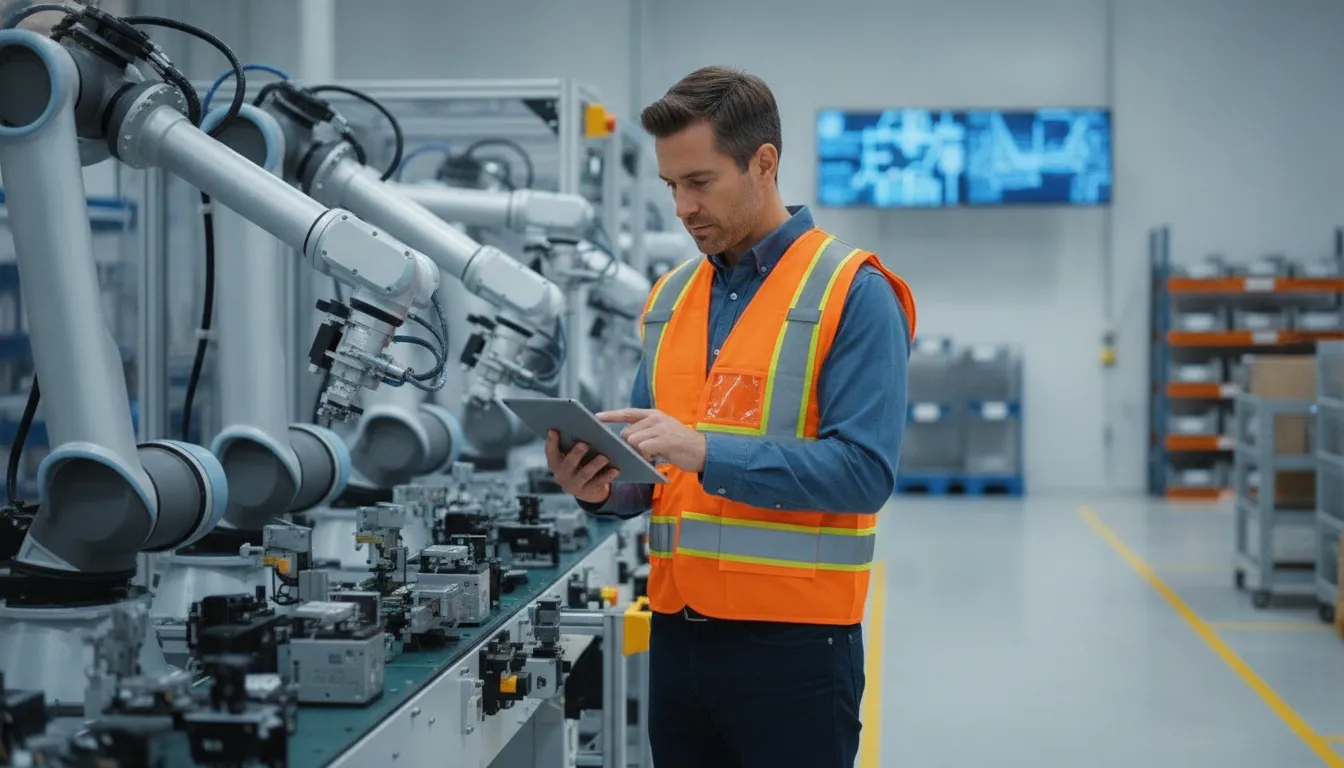
On a manufacturing floor, an IT problem rarely stays confined to one computer. A failed network connection can interrupt an operator’s access to an ERP or MES platform. A systems outage can stop a production line, delay scheduling, and leave employees waiting for instructions. When that interruption affects one facility, the consequences may continue outward through suppliers, distributors, and customers that depend on the same production timeline.
The Cybersecurity and Infrastructure Security Agency notes that downtime in manufacturing carries high financial costs and can disrupt interconnected supply chains. That is why plant operations require a much lower tolerance for interruption than a typical office environment. The risk is not simply lost productivity during an outage. It can include missed shipment windows, idle labor, expedited freight, spoiled materials, contract penalties, and damaged customer confidence.
IGTech365’s manufacturing guidance uses a practical cost anchor: downtime can cost about $9,000 per minute. The exact impact varies by facility, process, and order volume, but the point is consistent. Even a short outage can become an expensive operational event. Review the full breakdown of the costs of manufacturing downtime when calculating what an interruption could mean for your facility.
Prevention is more valuable than emergency response
Break-fix support starts after the damage has begun. A technician receives an alert from a frustrated employee, begins diagnosing the issue, and works toward restoring service while production remains disrupted. That approach may be acceptable for a low-impact office application. It is a poor fit when every minute affects throughput and delivery commitments.
Specialized manufacturing IT support takes a different approach. Proactive monitoring watches critical infrastructure continuously, including servers, networks, security controls, backups, and the systems that connect business IT with operational technology. Early warning signs can be investigated before they become a line-stopping failure. Maintenance can also be planned around production schedules instead of being forced into the middle of a shift.
Fast remote resolution matters as well. Centralized 24/7 monitoring gives a support team the opportunity to respond outside normal office hours, when an overnight issue might otherwise remain undetected. IGTech365 reports that its team resolves about 90% of issues remotely, reducing the delay and disruption associated with waiting for an onsite visit. The goal is not to make dramatic repairs after an outage. It is to keep IT running quietly in the background, so production teams can focus on making and delivering the product.
Compliance, Data Integrity, and Cybersecurity in Manufacturing
Manufacturers are responsible for more than keeping machines running. They must protect designs, production records, customer information, and the systems that control physical processes. That responsibility becomes more demanding when a facility serves aerospace, defense, medical, or other regulated markets. A security incident can expose intellectual property, interrupt a contract, or create evidence that the organization cannot reliably control its own operations.
Compliance depends on controlled, documented systems
Sector-specific requirements often reach beyond a firewall and antivirus software. They may require access controls, documented policies, secure configuration, vulnerability management, incident response, employee training, and evidence that these safeguards are operating consistently. The CISA guidance for critical manufacturing emphasizes both compliance responsibilities and protection of intellectual property. An IT partner should understand how those obligations connect to the plant’s ERP, MES, engineering files, cloud applications, and operational networks.
Government-contract manufacturers also need to evaluate requirements tied to Controlled Unclassified Information and the Defense Federal Acquisition Regulation Supplement. Depending on the contract and scope, Cybersecurity Maturity Model Certification may be part of doing business or maintaining eligibility. A practical review of CMMC compliance for manufacturers can help identify where access, documentation, endpoint security, and oversight need attention before an assessment creates an unwelcome surprise.
Data integrity is a production and safety issue
Confidentiality matters, but manufacturing cannot treat integrity as secondary. If a recipe, tolerance, sensor value, quality record, or controller setting is altered, the result may be a defective product, lost production time, or a safety incident. NIST’s manufacturing guidance specifically warns that manipulated data can cause product defects, production downtime, and safety incidents. Controls therefore need to protect the accuracy and trustworthiness of data as it moves between industrial control systems, SCADA platforms, MES applications, and business systems.
That requires more than detecting malware after the fact. Specialized support should help establish least-privilege access, strong authentication, change control, backup validation, secure remote access, logging, and monitoring for unusual changes. It should also account for operational realities, including systems that cannot be patched during a production run or restarted without a tested maintenance window. NIST’s data-integrity guidance for manufacturing provides a useful framework for evaluating these risks.
Cybersecurity controls affect insurance and continuity
Cyber insurers increasingly ask manufacturers to demonstrate concrete safeguards rather than relying on broad assurances. Multi-factor authentication, tested backups, endpoint detection, privileged-access controls, and a documented response plan may affect underwriting, coverage, and renewal discussions. Reviewing the cyber insurance requirements for manufacturing can clarify which controls should be prioritized and which evidence should be retained.
The goal is not compliance paperwork for its own sake. It is a defensible operating environment where sensitive designs stay protected, production data remains trustworthy, and the business can respond without improvising when a threat appears.
What Specialized IT Support for Manufacturing Actually Looks Like
Specialized manufacturing support is not simply a faster help desk. It is a management model built around production schedules, connected equipment, plant-floor safety, and the business cost of interruption. The difference becomes clear when you compare a break-fix arrangement with a managed approach that watches the environment continuously.
| Support area | Break-fix IT | Specialized managed IT for manufacturing |
|---|---|---|
| Monitoring | Reactive. The team usually learns about a problem when an employee, supervisor, or machine reports it. | Proactive and continuous. Centralized operations provide 24/7 monitoring so warning signs can be investigated before they become production interruptions. |
| OT and ICS awareness | Often limited to standard business technology such as workstations, email, and office networks. Industrial control systems may be treated like ordinary IT assets. | Support accounts for operational technology, including the way ERP, MES, SCADA, PLCs, network equipment, and production workflows interact. Changes are planned with plant-floor dependencies in mind. |
| Outage response | Response begins after the failure and may take hours or days, especially when the right specialist or replacement equipment is not immediately available. | Remote diagnostics and remediation resolve 90% of issues without requiring a site visit, helping restore service quickly while reserving onsite work for problems that truly require it. |
| Maintenance windows | Maintenance may happen occasionally or according to an IT-only schedule that does not reflect production demands. | Updates, configuration changes, and testing are coordinated around shifts, planned downtime, equipment availability, and critical manufacturing processes. |
| Compliance support | Compliance is often outside the basic support scope, leaving leadership to interpret requirements and document controls independently. | The provider helps align security practices with requirements such as CMMC and with cyber-insurance expectations, while documenting practical controls for review. |
What this looks like in practice
A specialized partner does not make every plant-floor decision on its own. Instead, it establishes clear ownership with operations, engineering, and leadership. That can include documenting which systems are business-critical, separating appropriate network segments, reviewing vendor access, and defining who is contacted when an alert affects production.
The same discipline applies to the physical network. Reliable connectivity supports scanners, workstations, wireless devices, security systems, and production data flows. Reviewing manufacturing network infrastructure best practices can help identify cabling and reliability issues before they become recurring support tickets.
For manufacturers weighing a change in support model, comparing the benefits of managed IT services is a useful starting point. The goal is not more technology for its own sake. It is a stable, visible, and accountable support system that keeps IT running in the background while your team focuses on production.
How to Choose the Right Specialized IT Partner for Your Facility
The right manufacturing IT partner should understand that a production environment is not simply an office with more computers. Your facility may depend on PLCs, SCADA systems, MES platforms, ERP and MRP data, secure remote access, and carefully timed maintenance. During the vetting process, look for an MSP that can connect those needs without treating production systems like ordinary office endpoints.
Use these questions to compare providers before signing an agreement:
- Confirm OT and ICS experience. Ask the provider to explain its experience supporting programmable logic controllers, supervisory control and data acquisition systems, and manufacturing execution systems. The answer should go beyond naming technologies. A capable partner should describe how it documents plant-floor dependencies, separates critical systems, coordinates with engineering and operations, and troubleshoots without creating an avoidable production risk. Ask for relevant examples, references, and a clear escalation path when an issue crosses from IT into controls engineering.
- Verify 24/7 monitoring and remote resolution. Manufacturing problems do not always wait for office hours. Confirm that the MSP provides continuous monitoring through a centralized operations team and can respond when alerts occur overnight or during a weekend run. Also ask what percentage of issues it resolves remotely. IGTech365 reports resolving 90% of issues remotely, which can reduce delays and unnecessary site visits. Request a definition of that figure and ask how on-site support is handled when remote remediation is not appropriate.
- Check maintenance-window planning. A partner should plan updates, backups, security changes, and equipment work around production schedules rather than impose a generic maintenance calendar. Ask how it identifies approved windows, documents rollback plans, communicates changes to supervisors, and handles emergency fixes. The process should protect shifts, changeovers, shipping deadlines, and other operational constraints. Clear scheduling is one sign that the provider understands your business workflow, not just your device inventory.
- Confirm compliance support. If your facility handles controlled information or government-related work, ask how the MSP supports CMMC and DFARS requirements, evidence collection, access controls, incident response, and ongoing policy management. Discuss cyber insurance requirements as well. The provider should distinguish between helping implement and document controls and guaranteeing compliance or coverage. You can review this guide to CMMC compliance for manufacturers before your discovery meeting, then use the requirements to test each proposal.
- Ask about ERP and MRP data integration. Specialized support should help information move reliably between production, inventory, purchasing, scheduling, and leadership systems. Ask how the provider protects interfaces, monitors failed data exchanges, manages permissions, and supports supply-chain visibility. A strong answer will address data ownership and recovery, not just connectivity. It should also explain how changes are tested before they reach a live production workflow.
Finally, evaluate how the relationship will feel after implementation. You want defined response targets, regular reviews, useful reporting, and a named team that learns your facility over time. A provider that keeps IT running in the background, always working, can become a practical growth partner instead of another source of operational friction. As a next step, review managed IT services and schedule a conversation about your facility’s systems, production windows, and priorities.
Ready to keep your manufacturing operations secure and online? Schedule a consultation with IGTech365 or call (866) 365-7798.
Frequently Asked Questions
Can a general MSP support a manufacturing plant floor?
Sometimes, but only if the provider understands the difference between business IT and operational technology. Manufacturing environments may include ERP or MRP platforms alongside ICS, SCADA, PLCs, and other systems with real-time requirements. NIST notes that standard IT infrastructure and security controls can be insufficient for ICS environments, so your provider should document how it protects production systems without disrupting operations.
What should specialized manufacturing IT support monitor?
Support should cover the full connection between office systems and production technology, including network health, endpoints, servers, backups, identity, security alerts, and critical integrations. Ask how the provider handles maintenance windows, separates sensitive systems, escalates plant-floor incidents, and coordinates with operations before making changes. The goal is preventive visibility, not waiting for a production problem to reveal an issue.
How does specialized IT support help reduce manufacturing downtime?
It identifies warning signs before they become outages, keeps recovery plans current, and provides a defined response process when an incident occurs. CISA explains that manufacturing downtime carries high financial costs and can disrupt interconnected supply chains. A provider that offers 24/7 monitoring and remote remediation can often address issues without waiting for an onsite visit. While still involving facility staff when hands-on work is required.
Does every manufacturer need CMMC or other compliance support?
Not every manufacturer has the same obligations. Requirements depend on the contracts you hold, the information you handle, your customers, and your sector. A qualified IT partner can help map those requirements to access controls, documentation, backups, incident response, and vendor practices. Compliance should be evaluated alongside intellectual-property protection and operational risk, not treated as a once-a-year checklist.
Why is data integrity especially important in manufacturing?
Production decisions depend on accurate data from connected systems. If industrial-control data is manipulated, the consequences can include product defects, production downtime, or safety incidents. NIST identifies data integrity as critical in manufacturing, so specialized support should include change control. Secure access, monitoring, tested backups, and a clear method for investigating unusual data or system behavior.
Ready to Strengthen Your Manufacturing IT Support?
A specialized IT partner can help connect plant-floor technology with business systems while keeping reliability, security, and planned maintenance in view. The right support plan reduces avoidable disruption, clarifies compliance and recovery priorities, and keeps production moving through planned maintenance with minimal risk.
Talk with the IGTech365 team about your facility’s systems, outage tolerance, and support needs. Call (866) 365-7798 to speak with a specialist, or schedule your consultation online and take the next step toward more dependable IT operations.