
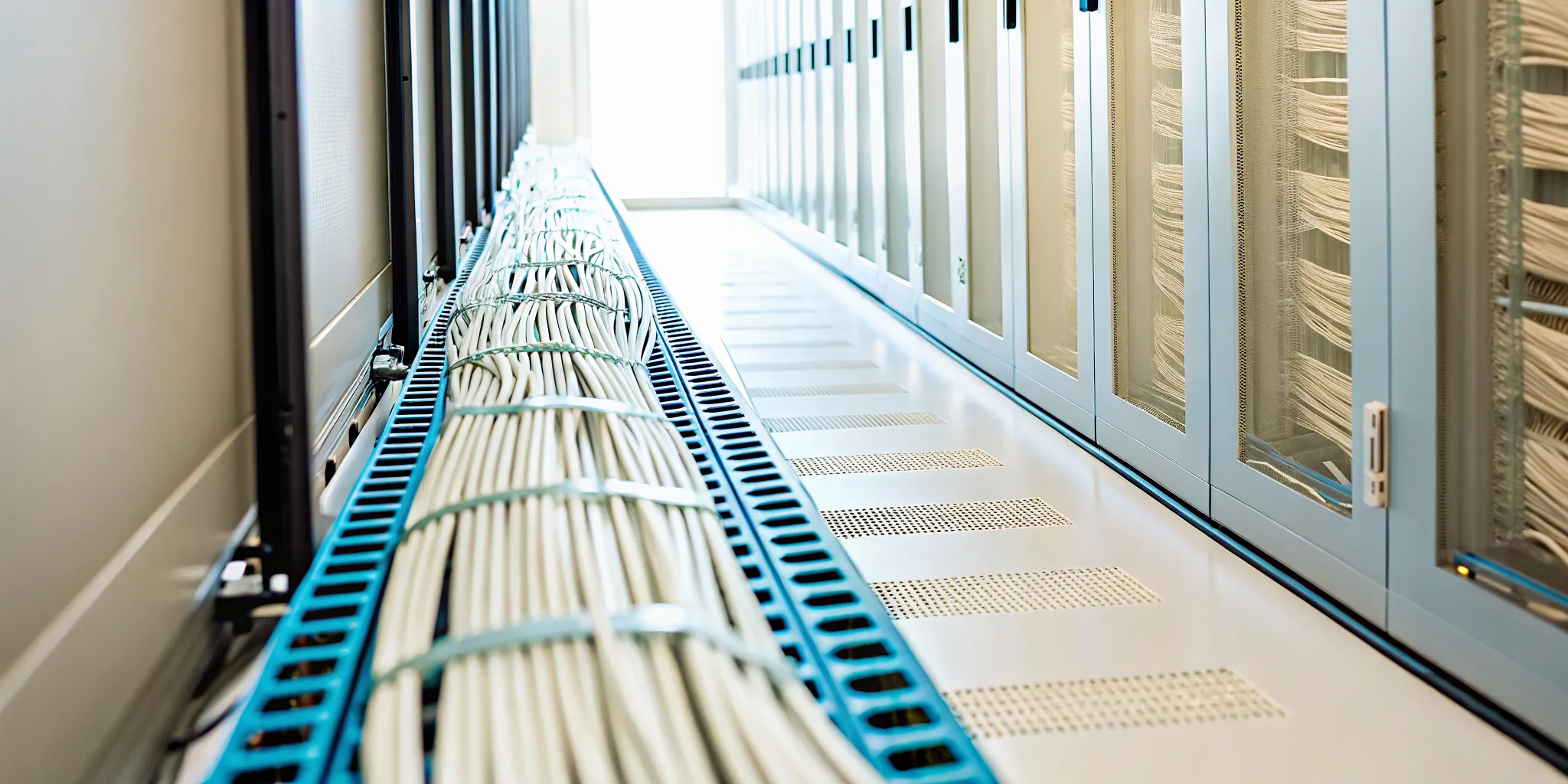
When your network goes down, the clock starts ticking on lost revenue. For a Tampa business, downtime can cost an average of $5,600 per minute, a staggering price to pay for a problem often caused by a disorganized server closet. That tangled mess of wires isn’t just messy; it’s a direct threat to your bottom line, causing connection failures that bring productivity to a halt. This guide explains how structured cabling reduces downtime by replacing that chaos with an organized, reliable system. It’s a foundational investment that prevents costly outages, turning your network from a financial liability into a stable asset.
Key Takeaways
- Prevent downtime by fixing the physical layer: Most network failures are caused by disorganized, aging, or unlabeled wires, not your internet provider. Structured cabling creates a stable and organized foundation that eliminates these common physical problems.
- Cut troubleshooting time from hours to minutes: A messy server closet makes finding a bad cable a slow, manual process. With a labeled, centralized system, technicians can pinpoint and fix connection issues quickly, minimizing costly interruptions.
- Invest once for long-term savings and growth: The upfront cost is small compared to the ongoing expenses of downtime and slow repairs. A structured system lowers maintenance costs and provides a scalable foundation that supports your business’s growth without needing expensive future overhauls.
How Does Structured Cabling Prevent Network Downtime?
When your network goes down, the first instinct is often to blame the internet provider or a faulty server. But what if the real problem is hiding in plain sight, tangled in a closet? The physical layer of your network, the cabling that connects everything, is the foundation for all your business operations. If that foundation is unstable, you’ll constantly be dealing with slowdowns, dropped connections, and frustrating downtime. This is where structured cabling makes a significant difference. It’s a standardized and organized approach to your network’s wiring that replaces chaos with order.
Think of it as the difference between a city with a planned grid of labeled streets and one with a tangled mess of unmarked dirt roads. A structured system is designed from the ground up for reliability, scalability, and easy management. It ensures that every connection is solid, labeled, and easy to trace. This methodical approach directly prevents the common physical-layer issues that cause network outages. By creating a predictable and stable environment for your data to travel, you’re not just cleaning up a messy closet; you’re building a more resilient infrastructure for your entire business. This is a core component of our IT services because a reliable network is non-negotiable.
Structured vs. “Point-to-Point” Cabling: What’s the Difference?
The difference between structured and point-to-point cabling comes down to one word: organization. Point-to-point cabling is an ad-hoc method where a cable is run directly from one device to another whenever a new connection is needed. Over time, this creates a “spaghetti closet” of tangled, unlabeled wires. When a connection fails, troubleshooting becomes a nightmare of manually tracing wires through a chaotic mess, turning a 10-minute fix into a multi-hour outage.
Structured cabling, on the other hand, is a methodical and organized system for your entire building’s wiring. It uses a series of standardized components, like patch panels and wall outlets, all connected to a central hub. Every cable is run, terminated, and labeled according to industry standards. This creates a clean, manageable, and scalable network map that anyone can understand.
What’s Included in a Structured Cabling System?
A structured cabling system is more than just a bundle of wires. It’s a complete subsystem that includes several key components working together. You have the main telecommunications room, where centralized patch panels terminate all the cables from around the office. From there, horizontal cabling runs to wall outlets in individual workspaces. Patch cords then connect devices to these outlets. This design is crucial for improving the predictability and stability of your network.
Because everything is organized and labeled at the central patch panel, identifying and resolving issues is incredibly fast. Instead of digging through ceiling tiles, a technician can quickly test and reroute connections in one location. This organized layout is key to making troubleshooting and maintenance quicker and more efficient. In fact, businesses that switch to this model have seen network uptime improve to 98% by getting rid of the signal interference and data loss caused by messy wiring, making network security services more effective.
What Are the Top 3 Causes of Network Downtime?
When your network goes down, the first instinct is often to blame the internet provider or a software glitch. But more often than not, the real problem is hiding in plain sight, tucked away in your server closet. Years of quick fixes, office moves, and technology upgrades can turn your network’s physical foundation into a major liability. For businesses here in Tampa, where a simple power flicker can expose weak points, this managed IT support.
Mystery Wires: Unlabeled and Untraceable Connections
The “spaghetti closet” creates a second, more frustrating problem: every cable is a mystery. Imagine your lead accountant can’t connect to the server right before a major tax deadline. With an unstructured system, your IT team has to manually trace that single wire through a tangled web, a process that can take hours of guesswork. With a structured and labeled system, the organized layout makes identifying and solving problems easy. An issue that could have caused hours of lost productivity can be pinpointed and resolved in minutes. This is especially critical for industries like healthcare or legal services, where every minute of downtime has a direct financial and operational impact. Unlabeled ports also pose a significant cybersecurity risk, as they make it easy for an unauthorized device to be plugged into your network undetected.
Outdated Infrastructure: Aging or Incompatible Hardware
Your network is only as strong as its weakest link. You can pay for the fastest business internet available, but if you’re running it through 15-year-old Cat5 cables, you’ll never get the speeds you’re paying for. Aging infrastructure, including old cables, patch panels, and switches, creates performance bottlenecks that lead to slow speeds, dropped connections, and data errors. Furthermore, mixing old and new hardware can cause compatibility issues that result in unpredictable network behavior that’s incredibly difficult to diagnose. Implementing a modern, structured cabling system enhances network reliability and simplifies future expansions. It ensures your physical infrastructure can support the demands of today’s technology, like high-definition video calls and cloud applications, while preparing your business for whatever comes next. An IT consulting partner can help you assess your current infrastructure and plan an upgrade that aligns with your business goals.
How Structured Cabling Directly Improves Network Uptime
A structured cabling system does more than just tidy up your server closet; it creates a stable foundation that directly prevents network downtime. Instead of reacting to constant, unpredictable network failures, you get a system designed from the ground up for reliability. This proactive approach addresses the root causes of many network issues, moving your business operations from a state of frustrating interruptions to one of smooth, consistent connectivity. By focusing on signal integrity, industry standards, and built-in resilience, structured cabling transforms your network from a liability into a dependable asset.
Get Cleaner Signals with Less Interference
In a disorganized “point-to-point” setup, data cables are often tangled with power cords or stretched tightly around corners. This chaos isn’t just messy; it actively degrades your network performance by creating electromagnetic interference (EMI). This interference corrupts data signals, leading to packet loss, slow speeds, and frustrating connection drops for your team. A structured cabling system eliminates this problem by design. It uses dedicated pathways and maintains proper separation between data and power lines. Real-world business cases show that structured cabling overhauls can improve network uptime to 98% or higher simply by eliminating interference and packet loss caused by a poor cabling layout.
Achieve Predictable Performance with Industry Standards
The key to a reliable network is predictability, and that’s exactly what structured cabling delivers. Unlike haphazard wiring, a structured system adheres to strict industry standards, like those from the TIA/EIA. These standards govern everything from the type of cable used to the way connections are terminated. Following these guidelines ensures every port and connection performs exactly as expected. At IGTech365, our technicians are trained on these standards to ensure every installation is consistent and reliable. This standardization removes the guesswork and creates a stable network environment where you don’t have to worry about random failures caused by a poorly made connection. This is how you achieve the stability needed for VoIP phones, cloud applications, and large file transfers to work flawlessly.
Build in Redundancy and Fault Tolerance by Design
When a connection fails in a messy server room, the resulting downtime can last for hours while a technician traces the mystery wire. A structured system is designed to minimize this recovery time. With everything neatly organized and labeled in a central patch panel, identifying and rerouting a faulty connection takes minutes, not hours. This design also inherently builds in fault tolerance. For example, if a wall port is damaged at an employee’s desk, we can quickly disable that port at the patch panel and activate another one without disrupting anyone else. This modular approach simplifies repairs, upgrades, and expansions, ensuring that a single point of failure doesn’t bring down your entire operation.
How Can Structured Cabling Cut Troubleshooting Time?
When your network is down, the clock is ticking. Every minute of lost connectivity costs your Tampa business money in lost productivity and potential sales. The difference between a five-minute fix and a five-hour ordeal often comes down to one thing: organization. This is where structured cabling becomes a critical asset for your business continuity. Instead of digging through a tangled mess of wires, your IT team can follow a logical, documented system to pinpoint problems methodically.
Think of it like trying to find a faulty wire in your car. If you have a clear wiring diagram, you can trace the issue from the fuse box to the component. If you just have a bundle of identical, unlabeled wires, you’re left with guesswork. Structured cabling provides that clear diagram for your entire network. This organized approach dramatically cuts down on the time it takes to diagnose and resolve issues, getting your team back to work faster. It transforms troubleshooting from a chaotic fire drill into a predictable, efficient process handled by your IT services provider.
Find the Right Cable in Seconds, Not Hours
In a disorganized server closet, a simple request like “check the connection for the front desk computer” can trigger a time-consuming manual search. A technician might spend hours tracing a single cable through ceilings and walls, all while your employee sits idle. Structured cabling eliminates this frustrating and costly guesswork. With a proper system, every cable is labeled on both ends and corresponds to a documented network map. This organization allows an IT professional to locate the right cable in seconds. What was once a major headache becomes a quick check at the patch panel, drastically reducing the time it takes to identify a faulty cable or port and get the connection restored.
Simplify Fixes with Centralized Patch Panels
A core component of structured cabling is the centralized patch panel, which acts as your network’s switchboard. All cables from offices, conference rooms, and workstations run back to this single, organized hub. This design completely changes the troubleshooting process. Instead of running to a specific desk to test a connection, a technician can do it right from the server room. This centralized access streamlines the troubleshooting process and makes it easy to isolate problems. For example, if a connection is down, the tech can quickly use a tool to test the line from the panel to the wall jack, immediately determining if the issue is with the building’s wiring or the user’s local equipment.
Reduce Human Error During Maintenance and Changes
Businesses are dynamic; employees move desks, new team members are onboarded, and equipment gets upgraded. Each of these events requires a change to your network connections. In a messy, point-to-point setup, these routine tasks are filled with risk. It’s far too easy to unplug the wrong wire and accidentally disconnect a critical server or an entire department. A well-planned cabling layout prevents this confusion. Because every port and cable is clearly labeled, the risk of human error during maintenance is minimized. This means your managed IT support team can perform moves, adds, and changes quickly and confidently, without causing unintentional downtime.
Is the Upfront Cost of Structured Cabling Worth It?
When you see the initial quote for a structured cabling installation, it’s easy to focus on the price tag. But thinking of it as a one-time expense misses the bigger picture. A structured cabling system is a long-term investment in your business’s stability, efficiency, and growth. The real question isn’t what it costs, but what it saves you. When you compare the upfront investment to the staggering cost of network downtime, frequent repair bills, and expensive future overhauls, the value becomes crystal clear. It’s a foundational upgrade that pays for itself by preventing the very problems that quietly drain your budget and productivity. A well-designed system is a core part of any effective IT services strategy, creating a reliable backbone for all your critical operations.
The True Cost of Downtime for a Tampa Business
An unreliable network isn’t just an annoyance; it’s a direct hit to your revenue. Studies show that network downtime can cost businesses an average of $5,600 per minute. For a Tampa law firm unable to access case files or a healthcare clinic that can’t process patient data, a single hour of outage can be catastrophic. A structured network provides the stability needed to keep your operations running without those unexpected interruptions. By organizing your infrastructure, you minimize the risk of connection failures, ensuring your team can stay productive and serve your clients without costly delays.
Lower Your Long-Term Maintenance and Repair Costs
A messy “spaghetti” server closet does more than just look unprofessional; it makes every IT task take longer and cost more. When a connection fails, a technician has to manually trace unlabeled wires through a tangled mess, turning a 15-minute fix into a multi-hour project. A structured cabling system eliminates this chaos. With everything organized, labeled, and terminated at a central patch panel, troubleshooting becomes simple and fast. This predictability allows our technicians to resolve issues more efficiently, which directly lowers your long-term maintenance costs and reduces your reliance on emergency support calls.
Scale for Growth Without Expensive Infrastructure Overhauls
Your business isn’t static, and your network infrastructure shouldn’t hold you back. With a point-to-point cabling system, adding a new employee or moving a department often requires running entirely new cables across the office, a disruptive and costly process. Structured cabling is designed for scalability. Because the system is modular, adding a new workstation is as simple as running a single patch cable from a wall plate to the patch panel. This flexibility allows your business to adapt and expand without needing a complete and expensive infrastructure overhaul every time you grow.
Future-Proof Your Office for New Technology
Technology changes quickly. The network that supports your business today might not be able to handle the demands of tomorrow, from high-speed data transfers to new IoT devices. A properly installed structured cabling system using modern standards (like Cat6 or Cat6a) gives you the bandwidth to accommodate future technologies. This adaptability means you can integrate new tools and services without worrying if your wiring can keep up. By planning ahead with proper IT consulting, you avoid the massive expense and disruption of ripping out and replacing an outdated system just to stay competitive.
Your 3-Step Plan for a Structured Cabling Upgrade
Ready to leave network chaos behind? Upgrading to a structured cabling system is a project, but it doesn’t have to be a headache. Breaking it down into a clear, three-step process ensures you get a reliable, high-performance network that supports your business for years to come. This isn’t just about tidying up wires; it’s about building a foundation for growth and stability. Let’s walk through the plan.
Step 1: Choose the Right Cable Type for Your Needs
First, we need to select the right components. Structured cabling uses standard parts like cables, connectors, and patch panels to create a network that’s easy to manage and performs predictably. The most critical choice is the cable itself. For most modern offices, Cat6 or Cat6a cables provide the speed and bandwidth needed for daily operations, from video calls to cloud application access. For businesses that transfer massive files, like a healthcare practice with large imaging files or a construction firm with detailed blueprints, fiber optic cabling might be necessary for certain connections. Choosing the right type from the start prevents performance bottlenecks down the road.
Step 2: Plan for Current Capacity and Future Growth
A common mistake is designing a network only for your current team size and technology. A proper plan accounts for where your business is headed. Your new cabling system should be scalable, allowing you to add new devices or expand your office without a complete overhaul. For example, if you plan to add five new employees next year, we can ensure the patch panels and cable runs are already in place to support them. This foresight means your network can easily handle new technology and faster internet speeds as they become available. This kind of IT consulting is about future-proofing your investment and avoiding expensive, disruptive changes later.
Step 3: Partner with a Pro for Standards-Compliant Installation
Finally, the quality of the installation is just as important as the quality of the materials. A poorly installed system, even with the best cables, will fail to deliver reliable performance. That’s why it’s crucial to partner with certified professionals who understand industry standards for installation, termination, and testing. A professional team will provide a clear plan, ensure all work is compliant and documented, and test every connection to guarantee it meets performance specifications. As a provider of managed IT support for businesses across Tampa, we’ve seen firsthand how a standards-compliant installation prevents countless hours of future troubleshooting and downtime.
Related Articles
- 5 Best Managed IT Service Providers Reviewed | IGTech365
- IT Support for Accounting Firms Tampa: 5 Essentials | IGTech365
- How to Choose the Best Managed IT Service Providers | IGTech365
Frequently Asked Questions
Is structured cabling only for new office construction, or can you upgrade an existing workspace? Upgrading an existing office is one of the most common projects we handle. While it’s certainly easier to install during a new build, a professional team can absolutely retrofit a structured system into an established business. The process starts with a thorough assessment of your current layout and infrastructure. We then create a detailed plan to replace the old wiring with minimal disruption, often working after hours or on weekends to ensure your daily operations continue smoothly.
How can I tell if my current wiring is the source of my network problems? There are a few telltale signs that your cabling is the culprit. If your team experiences frequent, random connection drops that aren’t related to an internet outage, that’s a major red flag. You might also notice that file transfers are slow even though you pay for high-speed internet, or that video calls are consistently choppy. Another clear indicator is when your IT support spends hours trying to trace a single wire just to fix a simple connectivity issue. These symptoms point to a disorganized and unreliable physical network layer.
Will a full cabling project disrupt my business operations? We understand that any disruption to your business costs you money, so minimizing it is our top priority. A professional installation is carefully planned to be as efficient as possible. The most intensive work, like running cables through walls and ceilings, can often be scheduled outside of your normal business hours. The final connections and switchover are planned for a time that will have the least impact on your team’s productivity, ensuring a smooth transition to your new, reliable network.
My business is small. Is structured cabling an unnecessary expense? It’s actually the opposite. For a small business, every employee’s productivity is critical, and network downtime can be proportionally more damaging. A structured system isn’t a luxury; it’s a foundational investment in reliability. It prevents the costly interruptions and slow performance that hold a small team back. By reducing troubleshooting time and creating a stable network, you ensure your team can operate at full capacity, making it one of the most practical investments you can make in your company’s efficiency.
What’s the real difference between Cat6 and Cat6a cables, and which one do I need? Think of it in terms of highway lanes. Cat6 is the standard for modern offices, providing excellent speed and performance for most business activities like cloud apps and video calls. Cat6a is a step up, offering even more bandwidth and better protection against interference, which makes it ideal for data-heavy environments like healthcare or design firms. Choosing between them depends on your specific needs and future growth plans. We can help you decide which option provides the best long-term value for your business.