
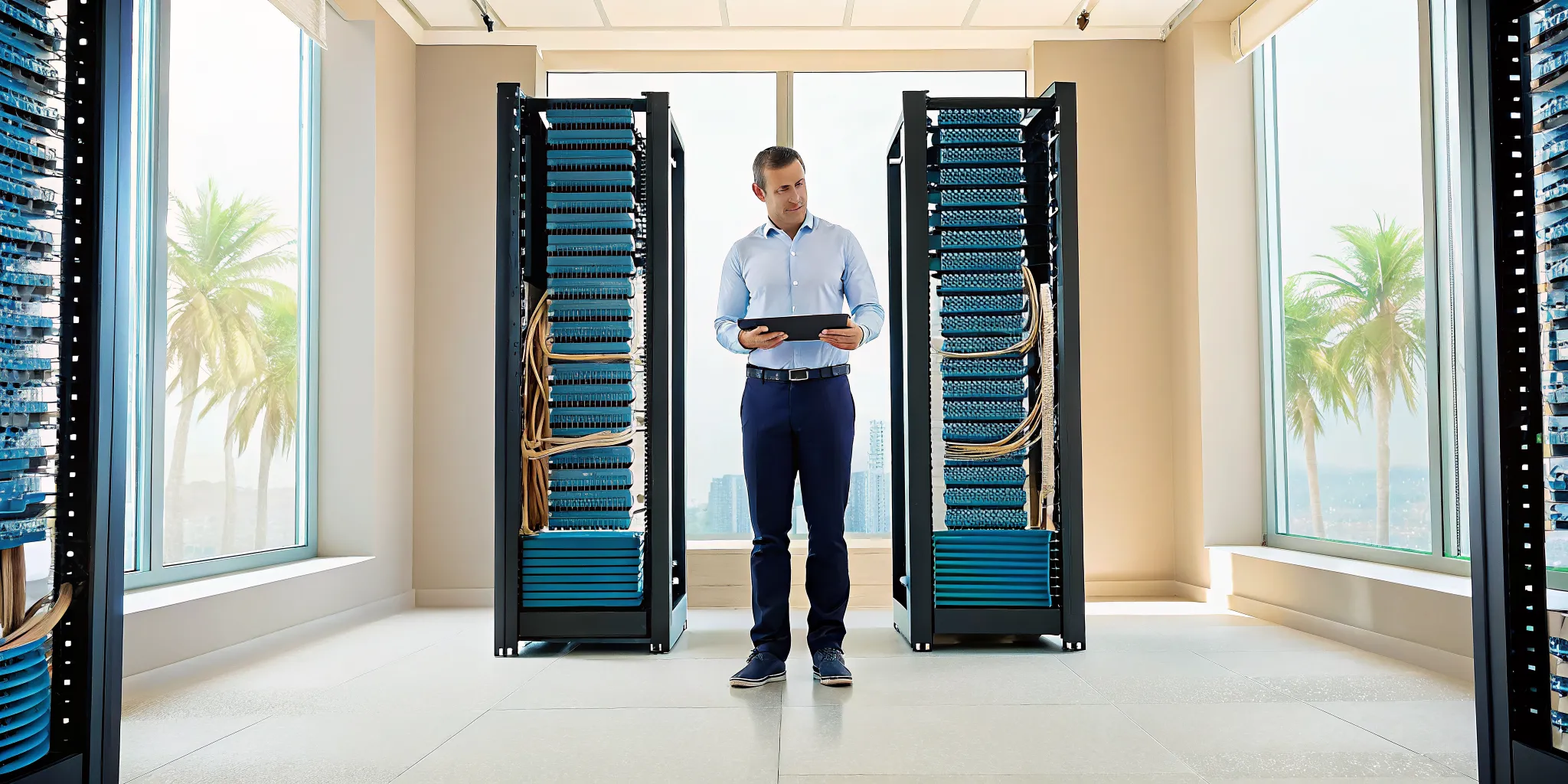
That tangled web of wires in your server closet isn’t just messy; it’s a business liability. This “spaghetti wiring” leads to slow network speeds, frustrating downtime, and troubleshooting nightmares that cost your company time and money. The professional solution is a structured cabling system, an organized infrastructure that forms a reliable backbone for your entire office. If you’re ready to fix your network foundation, your first question is likely, “How much does structured cabling cost in Florida?” The answer depends on several factors, but a typical project ranges from $150 to $325 per connection, a worthy investment for long-term operational stability and growth.
Key Takeaways
- Treat cabling as a one-time asset, not a recurring expense: A planned system prevents future performance issues and costly network overhauls, forming a reliable foundation for all your business technology.
- Understand the full cost of your project: While a single network connection point typically costs between $150 and $325 in Florida, your final budget must also account for essential hardware, permits, and professional labor.
- Vet your provider by demanding an on-site evaluation: A trustworthy partner will refuse to give a final price without seeing your space and will provide an itemized quote that includes testing, certification, and warranties.
What Is Structured Cabling and Why Does It Matter?
Think of structured cabling as the central nervous system for your office. It’s the organized, standardized infrastructure of cables and hardware that connects all your technology, from computers and phones to security cameras and printers. Instead of a chaotic “spaghetti” of wires running under desks and through ceilings, structured cabling provides a clean, logical map for your entire network. This system is defined as the organized way to set up all the wires and connections for your business’s computers, phones, and other network devices.
Why does this matter for your Florida business? A properly designed cabling system is the foundation for all your IT operations. It ensures your network runs efficiently, makes troubleshooting a breeze, and simplifies future upgrades. When you need to add a new employee, install a new server, or move equipment, a structured system allows you to make changes quickly without disrupting the entire office. It’s a critical component of a scalable and reliable business, forming the backbone of all your IT services. Without it, you’re building your technology on a shaky, unpredictable foundation that can lead to constant headaches and costly downtime.
How Structured Cabling Supports Your Business
A well-planned cabling system does more than just look neat; it directly impacts your bottom line. By design, it creates a stable and organized foundation that supports performance, reliability, and long-term growth. For your team, this means fewer network-related interruptions and consistent speeds, allowing them to stay productive. Imagine your accounting firm trying to meet a tax deadline with a spotty connection or a healthcare clinic unable to access patient records due to network failure. Structured cabling minimizes these risks. It ensures your network is built for consistent speed and reliability, which is essential for supporting your daily operations without frustrating slowdowns or outages.
Structured Cabling vs. Traditional Wiring
At first glance, traditional, point-to-point wiring might seem like a cheaper option. This approach involves running a cable directly from one device to another as needed, often resulting in a tangled mess. While it may save a few dollars upfront, this method almost always leads to higher costs down the road. Unstructured cabling is difficult to troubleshoot, prone to failure, and nearly impossible to scale efficiently. When a connection fails, a technician might spend hours just tracing the right wire through a web of identical-looking cables.
In contrast, a structured cabling system is a strategic, long-term investment. While the initial cost can be higher, it provides far better performance and is designed to accommodate new technologies for years to come. This forward-thinking approach is a core part of an effective managed IT strategy, saving you significant money and stress by preventing expensive downtime and future re-wiring projects.
What Does Structured Cabling Cost in Florida?
Figuring out a budget for structured cabling can feel tricky because every office is different. However, you can get a solid estimate by understanding how professionals price these projects. The total cost depends on the type of cable you choose, the size of your space, and the complexity of the installation. For a typical Tampa business, you can expect to pay between $150 and $325 per network connection point, or “drop.”
This price range covers everything from basic setups for small offices to more advanced installations for businesses that need top-tier network performance. As an IT partner with over 10 years of experience, we help Florida businesses plan their cabling projects to align with both their budget and their long-term goals. A well-planned cabling system is the foundation for reliable Wi-Fi, fast data access, and clear VoIP calls, making it a critical part of your overall managed IT support strategy.
Breaking Down the “Cost Per Drop”
In the cabling world, you’ll hear the term “cost per drop” a lot. A “drop” is simply one ethernet cable run from your central network closet to a specific point in your office, like a desk or a conference room. For most Tampa businesses, installing a standard Cat6 cable costs between $150 and $250 per drop. This price isn’t just for the cable itself; it’s an all-inclusive figure that typically covers the cable, the wall plate and jack, termination at both ends, and the labor required to run, test, and certify the connection. This pricing model makes it easier to estimate your project’s cost based on how many connection points your team needs.
Cost vs. Performance: Cat5e, Cat6, and Cat6a
Not all cables are created equal, and the type you choose will directly impact both cost and network speed. Cat6 is the current standard for most new office installations, offering a great balance of price and performance for modern business needs. It supports speeds up to 10 Gbps over shorter distances, which is more than enough for daily operations. While older Cat5e cable is slightly cheaper, it offers slower speeds and less protection from interference. For businesses with high-demand applications or those wanting to future-proof their network for the next decade, Cat6a provides 10 Gbps speeds over longer distances but comes at a higher price point.
Here’s a general cable price estimator per drop:
- Cat5e: $170 – $270
- Cat6: $175 – $275
- Cat6a: $200 – $325
Estimating Fiber Optic Cabling Costs
Fiber optic cable is the top-tier choice for network backbones. Instead of connecting individual desks, it’s used for high-speed links between your main server room and other network closets or even between separate buildings on a campus. Because it transmits data using light, it’s incredibly fast and immune to electronic interference. However, fiber is significantly more expensive to install than copper ethernet cable. The material costs more, and it requires specialized tools and technicians for proper termination and testing. While it’s not necessary for every drop, it is the best solution for ensuring your network’s core infrastructure can handle heavy traffic from dozens or hundreds of users.
Example Costs by Project Type
To give you a better sense of a total budget, let’s look at a few common project sizes. Keep in mind these are general estimates, and a final quote will depend on your specific layout and requirements.
- Small Office (20-30 drops): For a small law firm, accounting practice, or startup, a project of this size typically costs between $3,000 and $6,000. This would provide reliable network access for a team of 10-20 employees.
- Mid-Size Office (75-150 drops): A growing company or a larger professional services firm in this range can expect to invest between $12,000 and $30,000. This scale of project often involves more complex layouts and multiple network closets.
- Large Projects (150+ drops): For large corporate offices, manufacturing plants, or healthcare facilities, structured cabling pricing can start at $50,000 and go up from there based on complexity.
What Factors Drive Cabling Costs Up or Down?
While the “cost per drop” gives you a baseline, the final price on your structured cabling quote is shaped by several key factors specific to your business and building. Understanding these variables helps you decode your estimate and see where your money is going. It’s not just about the number of cables; it’s about the complexity of the environment they’re being installed in. From the type of ceiling in your office to the specific building codes in Hillsborough or Pinellas County, every detail influences the project’s scope and cost. Let’s break down the four biggest factors that will drive your cabling costs up or down.
Building Layout and Number of Drops
The most direct cost factor is the number of connection points, or “drops,” you need. Each drop represents a location where a device will connect to the network, like a computer, VoIP phone, or printer. While more drops increase the total cost, the price per drop often decreases with volume. A project with 100 drops will have a lower per-drop cost than one with 10. The physical layout of your space also plays a huge role. An open-concept office in downtown Tampa is simpler to cable than a law firm of the same size in Wesley Chapel that has dozens of individual offices requiring wall penetrations and more complex cable runs. This is a core part of planning your overall IT services infrastructure.
Installation Environment and Ceiling Type
The physical environment where the cables are installed is one of the most significant variables affecting labor costs. A building with drop ceilings (removable acoustic tiles) allows technicians easy access to run cables, making the job faster and cheaper. In contrast, hard ceilings made of drywall or concrete require much more labor. Technicians must cut, drill, and then patch and paint the surfaces, which can double the installation time. Similarly, cabling an empty warehouse or a new construction site is far simpler than working in a fully furnished and operational office, where technicians must carefully work around furniture, equipment, and employees. Proper planning during an IT consulting phase can help map out these challenges ahead of time.
Labor Rates and Project Complexity
Labor typically accounts for over 50% of a structured cabling project’s total cost, so project complexity is a major driver. A standard installation during business hours is the baseline. However, if the work must be done after hours or on weekends to avoid disrupting your operations, expect to pay a premium for labor. The type of business also matters. Cabling a standard office is different from cabling a healthcare facility in St. Petersburg, which has strict regulations regarding dust, noise, and patient privacy. These complex scenarios require more meticulous planning and execution, increasing the time and skill required from the installation team and ultimately impacting the cost of your managed IT support.
Florida-Specific Cost Factors
Installing cabling in Florida comes with its own unique set of challenges. The high humidity and salt air, especially in coastal areas like Tampa and St. Petersburg, can corrode connections and degrade cable performance over time if not addressed properly. This often means using more durable, and sometimes more expensive, materials rated for high-humidity environments. Furthermore, local building codes can vary by county and city, dictating specific installation requirements, conduit use, and whether plenum-rated cables are necessary for air-handling spaces. Adhering to these codes is non-negotiable and a critical component of your physical network cybersecurity, ensuring your infrastructure is both safe and reliable.
What Other Costs Should You Budget For?
The “per-drop” price is a great starting point, but it rarely tells the whole story. Several other factors contribute to the final invoice for a structured cabling project. A trustworthy provider will outline these costs in your estimate, but it’s smart to know what to look for so you can budget accurately. These additional costs aren’t about padding the bill; they’re about ensuring the project is done right, meets legal standards, and minimizes disruption to your business. Let’s break down what else you should expect to see on a comprehensive quote.
Permits and Code Compliance Fees
In Florida, most structured cabling projects require a low-voltage permit to ensure the work complies with local and national safety codes. This isn’t just red tape; it’s about preventing fire hazards and ensuring your infrastructure is safe and reliable. Relying on messy or unplanned cabling can lead to serious issues, including failing inspections and non-compliance with local codes. Your installation partner should handle the entire permitting process, from application to final inspection. The cost varies by municipality but typically ranges from a few hundred to over a thousand dollars depending on the project’s scale. This fee is a non-negotiable part of a professional installation that protects your business, your employees, and your investment.
After-Hours or Phased Installations
Most installation quotes assume the work will happen during standard 9-to-5 business hours. However, for many businesses like medical offices or law firms, having technicians drilling and running cables during the day is simply not an option. If you need to avoid operational downtime, you can schedule the installation for after-hours, on weekends, or in phases. While this flexibility is crucial for business continuity, it comes at a premium. Labor rates for nights and weekends are higher, which can increase the total project cost. Be sure to discuss your operational constraints with your provider upfront so they can build a realistic timeline and accurately price the labor for your project.
Network Racks, Patch Panels, and Hardware
Your new cables are only as good as the network they connect to. A complete structured cabling system requires a central hub, often called a network closet or Main Distribution Frame (MDF). This space needs to be properly equipped with hardware to organize and manage your connections. Key components include server racks, patch panels, network switches, and cable management trays. Setting up this equipment room can add $1,500 to $4,000 to your project cost, depending on your needs. This hardware is the backbone of a clean, scalable, and easy-to-manage network, forming a critical part of your overall IT services.
Cable Testing, Certification, and Documentation
A professional installation always concludes with testing and certification. Technicians use specialized tools to test every single cable, ensuring it performs at the certified speed (e.g., 1 Gbps for Cat6). Good installations include testing all cables to make sure they work correctly, which adds to the cost but is essential for quality assurance. Your provider should give you a report certifying that each connection passed. They should also provide documentation, like labeled ports and a network map, that makes future troubleshooting and upgrades simple. This step guarantees you’re getting the performance you paid for and is a hallmark of a reliable IT consulting partner.
Debunking 3 Common Cabling Cost Myths
When budgeting for your office network, a few common misconceptions can lead to expensive mistakes. Believing these myths might seem to save you a few dollars upfront, but they often result in poor performance, surprise expenses, and major headaches down the road. Let’s clear up three of the most common myths so you can make an informed investment in your business’s network infrastructure. Understanding the truth behind cabling costs ensures you build a reliable foundation that supports your company’s operations and growth for years to come.
Myth #1: “All cables are the same.”
It’s easy to think a cable is just a cable, but this is one of the most costly assumptions you can make. While lower-grade, unstructured cabling might seem like a bargain initially, it frequently leads to higher operational costs from network failures and slow performance. The quality and type of cable directly impact your network’s speed and reliability. For example, installing Cat5e cable might be cheaper, but it can bottleneck your entire system if your business relies on high-speed data transfer for cloud applications or large file sharing. A properly designed network is a core part of your overall IT services strategy, and using the right materials ensures you get the performance you pay for from your internet connection and hardware.
Myth #2: “I can get an accurate quote over the phone.”
A quick quote over the phone is nothing more than a rough guess. A legitimate and accurate estimate for structured cabling is impossible without a professional site survey. The final cost is a detailed calculation based on materials, the complexity of the installation, specific hardware like patch panels, and the labor required for testing and certification. For instance, the work needed for a modern office with drop ceilings is vastly different from a historic St. Petersburg building with plaster walls. A reputable provider will always schedule a walkthrough to assess the environment and identify potential challenges before providing a detailed proposal. This process is fundamental to providing reliable managed IT support that depends on a solid network foundation.
Myth #3: “Adding more drops later is cheaper.”
Waiting to add network drops as you need them seems practical, but it almost always costs more in the long run. The process of retrofitting is far less efficient than planning for future growth from the start. Think about the labor involved: it’s much cheaper to have a technician pull 20 cables at once than to have them come out four separate times to pull five cables. Each visit includes its own costs for mobilization, setup, and cleanup. A well-designed structured cabling system provides a scalable foundation that can adapt as your business evolves. Planning for your 3-to-5-year growth and installing a few extra drops in key areas now will save you significant time and money later, especially as you adopt more data-intensive technologies.
How to Get an Accurate Structured Cabling Estimate
Getting a reliable price for your cabling project isn’t as simple as a five-minute phone call. A truly accurate estimate requires a detailed look at your specific needs and your physical workspace. A provider who gives you a price without a site visit or a thorough conversation is likely to miss key details, leading to surprise costs down the road. The goal is to get a quote that reflects the full scope of work, from materials and labor to testing and certification. This ensures your network infrastructure is built right the first time, supporting your business for years to come.
Step 1: Define Your Project Scope
To get a quote you can trust, you first need to outline what you want to achieve. Start by walking through your office and identifying every location that needs a network connection. How many workstations, VoIP phones, printers, security cameras, and wireless access points will you have? Think about both your current needs and where your company might be in three to five years. A detailed floor plan with desired data drop locations is invaluable. This initial planning is critical because the full project scope determines everything from material needs to labor hours. If you need help mapping this out, our IT consulting team can help you design a network that aligns with your business objectives.
Step 2: Review Your Quote for Key Details
A legitimate quote is more than a single number; it’s an itemized breakdown of the entire project. When you receive an estimate, look for a clear separation of costs. A professional quote will detail the price of materials (cables, jacks, patch panels), skilled labor, and any associated hardware like server racks or cable management. It should also include line items for testing and certification, which are essential for guaranteeing performance. While pricing varies, many projects are priced “per drop,” with industry rates often falling between $150 and $300. If a quote seems vague or lumps everything into one fee, ask for a more detailed breakdown. This transparency is a hallmark of a trustworthy partner.
Step 3: Ask Your Cabling Provider These Questions
Once you have a detailed quote, it’s time to dig deeper with some pointed questions. This helps you understand the value behind the price and the provider’s expertise. While one solution might seem cheaper upfront, it could lead to higher operational costs from frequent failures later on.
Start with these questions:
- Why are you recommending this specific cable type (e.g., Cat6 vs. Cat6A)? What are the performance trade-offs?
- What is your process for testing and certifying each cable drop, and will I receive a report?
- Are your technicians certified by organizations like BICSI?
- What warranties do you provide for the cabling and the installation labor?
The answers will reveal a lot about a provider’s quality standards and commitment to building a reliable network foundation, which is a core part of any good cybersecurity strategy.
How to Choose the Right Cabling Provider in Florida
Selecting the right cabling provider in Florida is about more than just finding the lowest price. You are choosing a partner to build the physical foundation of your entire IT infrastructure. A great installer ensures your network is fast, reliable, and ready for future growth, while a poor one can leave you with slow speeds, constant downtime, and a messy server room that’s impossible to manage. The right partner understands how cabling fits into your broader business goals, from enabling seamless cloud access to supporting robust cybersecurity measures.
Think of it this way: you wouldn’t build a new office on a shaky foundation, so don’t build your network on one either. As a company with over 15 years of experience providing managed IT support in the Tampa area, we’ve seen firsthand how quality cabling prevents countless headaches. To make the right choice, you need to look beyond the price tag and evaluate a provider’s experience, transparency, and commitment to quality.
Verify Experience and Certifications
When your business depends on a stable network, experience is non-negotiable. An inexperienced installer can leave you with a disorganized system that causes slow performance, intermittent connectivity, and even security vulnerabilities. Before signing a contract, ask for proof of experience. Look for a provider with a portfolio of successful projects for businesses similar to yours, whether you’re in healthcare, construction, or legal services.
Ask them directly about their team’s certifications. Technicians certified by organizations like BICSI (Building Industry Consulting Service International) are trained in the industry’s best practices for design and installation. Don’t hesitate to request client references or case studies. A reputable provider will be proud to share their past work and connect you with happy customers.
Compare Quotes and Service Inclusions
An accurate quote is more than a single number; it’s a detailed project plan. When you compare estimates, look for a line-by-line breakdown of all costs, including materials, labor, hardware like patch panels, and testing. A suspiciously low bid often omits critical components or steps. For example, does the quote explicitly include cable testing and certification with a printed report? This step verifies that every cable performs to specification and is essential for future troubleshooting.
A transparent quote should also outline the provider’s process for handling unexpected issues. What happens if they discover asbestos during the installation or need to work around unforeseen obstacles? Understanding these details helps you avoid surprise charges and ensures you’re comparing apples to apples. If you need help evaluating complex IT proposals, our IT consulting team can help you make an informed decision.
Watch Out for These Red Flags
A disorganized cabling job, often called a “spaghetti closet,” is more than just an eyesore. It restricts airflow, which can cause your expensive network equipment to overheat and fail prematurely. It also turns simple troubleshooting tasks into hours-long ordeals, increasing downtime and labor costs. This is one of the biggest red flags, but there are others to watch for.
Be cautious of any provider who gives you a vague, one-page quote without details, seems reluctant to provide references, or can’t show proof of liability insurance. Another warning sign is a company that doesn’t mention post-installation testing, labeling, and documentation. Without these, you have no way to verify the quality of the work or efficiently manage your network in the future, increasing your risk of failures that could require data recovery services.
Is Structured Cabling a Smart Investment?
Absolutely. Viewing structured cabling as a foundational asset rather than a simple expense is key to understanding its value. Think of it as the central nervous system for your entire technology stack. Every piece of data, every phone call, and every cloud application relies on the physical network infrastructure to function. Investing in a well-designed system from the start prevents the performance bottlenecks, frustrating downtime, and security vulnerabilities that plague businesses running on disorganized, outdated wiring. It’s a one-time investment that pays dividends for years by ensuring your technology can actually deliver on its promises.
The Long-Term ROI of a Scalable Network
While the initial price of unstructured, point-to-point wiring might seem lower, it almost always leads to higher operational costs down the road. This “spaghetti” approach is difficult to troubleshoot, prone to failure, and can’t easily adapt to your company’s growth. Every time you need to add a new employee, a VoIP phone, or a security camera, you’re looking at another costly, disruptive wiring project.
Structured cabling provides a clean, organized foundation that can adapt as your business evolves. It’s designed to support future technologies and higher bandwidth demands, reducing the need for expensive overhauls. This scalability is where you see the real return on investment. Proper IT consulting can help you plan a cabling system that not only meets your needs today but also anticipates your requirements for the next 5 to 10 years.
Integrating Cabling into Your Managed IT Strategy
Your network cabling directly impacts the effectiveness of your entire IT strategy. When businesses rely on messy or unplanned wiring, they often face slow network speeds, intermittent connectivity, and security gaps. These issues create a constant source of frustration and make it incredibly difficult for IT technicians to diagnose and resolve problems efficiently. A simple issue can turn into hours of tracing cables through a tangled mess, leading to extended downtime and higher support costs.
A well-designed system creates a stable, organized foundation that supports reliability and growth. For businesses using managed IT support, this is critical. Labeled ports and organized patch panels allow our technicians to identify and fix issues faster, often remotely, which keeps your team productive. This clean infrastructure is essential for maintaining network performance, ensuring security, and getting the most value from your IT partnership.
Related Articles
- Managed IT Services Near Me – TAMPA BAY & CENTRAL FL | IGTech365
- 5 Best Managed IT Service Providers Reviewed | IGTech365
- Best Computer Career and Jobs in Networking & Sys Administration in Tampa | IGTech365
Frequently Asked Questions
Is Cat6 cable really necessary, or can I get by with the cheaper Cat5e? While Cat5e cable can handle basic network traffic, it’s an older standard that is quickly becoming a bottleneck for modern businesses. Think of it this way: Cat6 is the current industry standard for a reason. It provides faster speeds and better protection from interference, which is crucial for supporting video conferencing, cloud applications, and large file transfers without frustrating lag. Choosing Cat6 is a smart, forward-thinking investment that ensures your network can support your business not just today, but for years to come.
Why can’t I just rely on Wi-Fi and skip all this wiring? This is a common question, and the answer is that great Wi-Fi actually depends on great wiring. Your wireless access points (the devices that create your Wi-Fi signal) need to be physically connected to your main network with a high-speed cable. A structured cabling system acts as the stable, high-speed backbone that feeds your wireless network. Relying on Wi-Fi alone for everything often results in spotty connections, slow speeds, and security issues that a solid wired foundation helps prevent.
How long will a typical structured cabling installation take? The timeline for a cabling project depends entirely on the size of your office and the complexity of the installation. A small office with 20 to 30 drops and easy-to-access drop ceilings might only take a few days. However, a larger project with over 100 drops in a building with hard ceilings could take a week or more. A professional provider can schedule the work in phases or after hours to minimize disruption to your daily operations.
What’s the single biggest mistake to avoid when planning a cabling project? The most expensive mistake is planning only for your immediate needs. It’s far more cost-effective to install a few extra cable drops in strategic locations now than it is to have a technician come back later to add them one by one. Think about where your company will be in three to five years. Planning for that future growth from the start ensures your network is a scalable asset, not a recurring expense.
Do I really need a permit for a small cabling job in my office? In most Florida municipalities, yes, a low-voltage permit is required for structured cabling work. This isn’t just about following rules; it’s a critical safety measure. The permitting and inspection process ensures the installation meets electrical and fire safety codes, protecting your employees and your property. Any professional cabling provider will insist on pulling a permit and will handle the process for you. It’s a clear sign that they are committed to doing the job correctly and safely.