
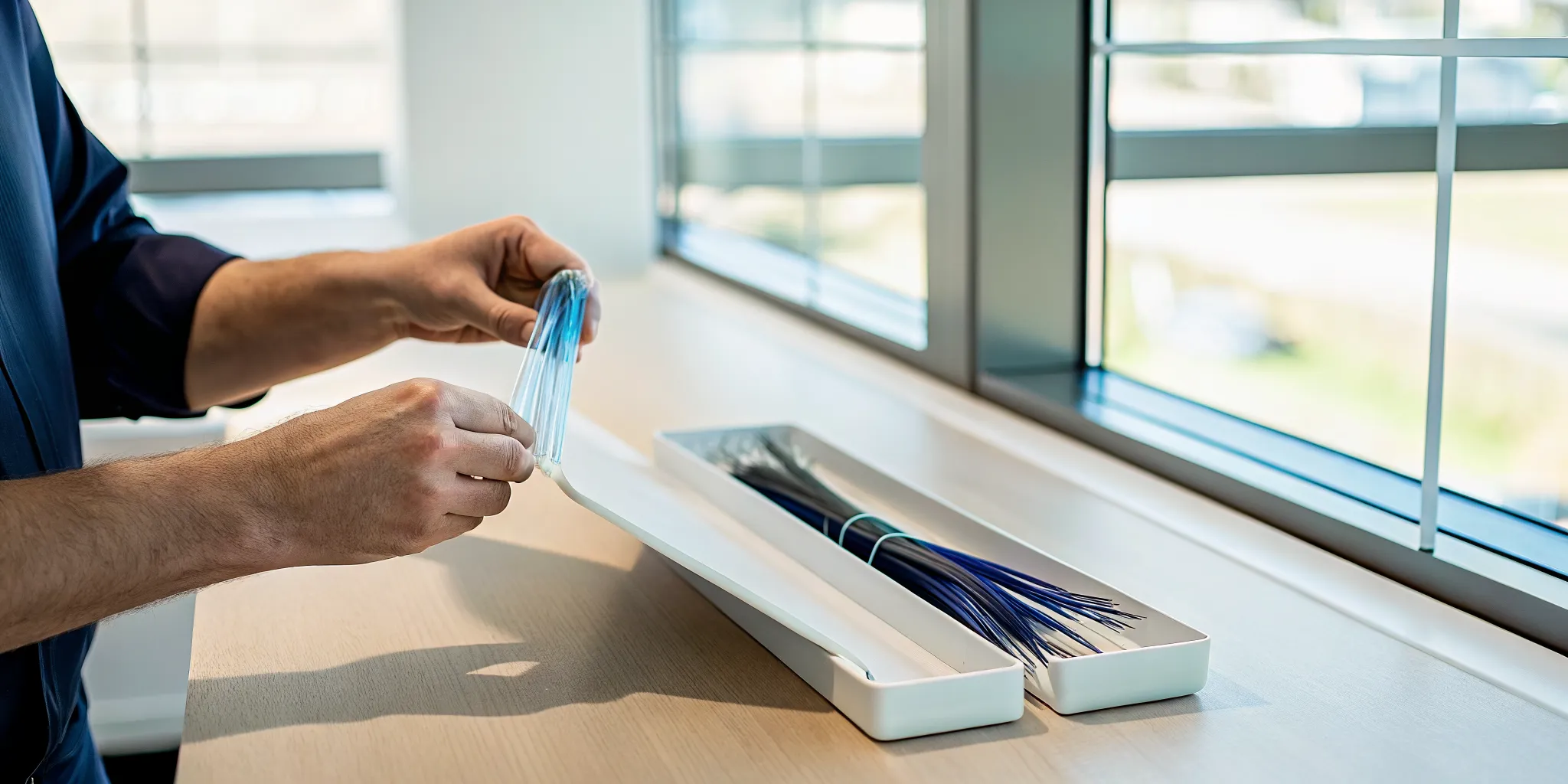
Your business is growing, but is your IT infrastructure, including its network, keeping up? When a fiber cable breaks, a repair only restores your connection to its previous state, which may not be enough to support your future needs. This is where the strategic decision of fiber optic repair vs replacement comes into play. If your building is still running on older OM1 or OM2 cables, it likely can’t handle the 10 Gbps+ speeds required for modern cloud applications. Instead of just fixing the break, view it as an opportunity to upgrade your infrastructure. This article will walk you through the key indicators that signal it’s time to invest in a replacement, ensuring your network can support your company’s goals for the next decade.
Key Takeaways
- Proactively protect your cabling: The best way to avoid costly downtime is to prevent damage in the first place. This means using a professional for the initial installation, shielding cables with protective conduit, and scheduling routine inspections to catch wear and tear early.
- Replace cables that are old or frequently fail: A repair isn’t always the best long-term solution. You should plan for a full replacement if a cable is over 15 years old, needs more than two repairs within five years, or if the damage is severe and difficult to access.
- Always use a professional for fiber repairs: Fixing a fiber optic cable requires expensive, specialized equipment and significant training. A DIY attempt often results in a poor connection and more downtime, so it’s best to rely on a certified IT team for a reliable, lasting repair.
What Causes Fiber Optic Cable Damage?
Fiber optic cables are the backbone of modern business communication, but they aren’t indestructible. Understanding what causes damage is the first step in preventing costly downtime. From construction crews to curious critters, several common culprits can sever your connection. Knowing these risks helps you create a better protection plan and decide whether a quick fix or a full replacement is the right call when something goes wrong. Here are the four most frequent causes of fiber optic cable damage we see in the field.
Construction and Accidental Damage
Believe it or not, the single biggest threat to your fiber optic network is a shovel. Construction and excavation accidents account for a staggering 60% of all fiber cable damage. With so much development across the Tampa area, it’s a constant risk. A backhoe operator who doesn’t check for underground utilities or even a simple landscaping project can accidentally sever a critical line. The resulting fiber optic cable repair cost can be significant, ranging from $1,000 to $5,000 for accessible above-ground cables and jumping to between $5,000 and $15,000 for buried lines that require extensive digging to reach.
Animal Tampering
You might be surprised how much damage Florida’s wildlife can do. Rodents like squirrels and rats have strong teeth and a constant need to chew, and fiber optic cables are an easy target. In some areas, animal tampering is responsible for up to 20% of all cable breaks. While it might seem like a minor issue, a chewed-through cable can bring your operations to a halt just as effectively as a clean cut from a shovel. Repairing this type of damage typically costs between $500 and $3,000, depending on how much of the cable needs to be replaced and how difficult it is to access.
Weather and Environmental Factors
Living in Florida means dealing with intense environmental conditions, which take a toll on outdoor infrastructure. Over time, constant exposure to harsh UV rays from the sun can degrade the protective outer jacket of a fiber cable, making it brittle and weak. Moisture from humidity and heavy rains can seep into tiny cracks, causing internal corrosion. These factors contribute to about 25% of all fiber damage. A hurricane or severe storm can easily bring down an aerial cable or flood an underground conduit. Repairs for weather-related damage often fall in the $2,000 to $8,000 range.
Improper Installation and Human Error
Sometimes, a fiber cable is doomed from the start due to human error. Improper installation practices are a leading cause of premature failure. For example, if a technician bends a cable too sharply, it can create micro-fractures in the glass fiber that disrupt the signal. Another common mistake is not leaving enough extra cable (a “service loop”) near connection points. This makes future repairs much harder and increases the risk of breakage if the cable is ever pulled or moved. Ensuring your network is set up by certified professionals who provide expert IT services is the best way to prevent these avoidable problems.
How Can You Tell If a Fiber Optic Cable Is Damaged?
Fiber optic cables are the backbone of modern business communication, but they aren’t invincible. Damage can happen for many reasons, from a nearby construction crew digging in the wrong spot to simple wear and tear over time. Spotting the signs of a damaged cable early is the key to preventing a minor issue from turning into a major outage that brings your Tampa business to a halt. If you suspect a problem, look for these three common indicators.
Slower Speeds and Dropped Connections
This is often the first red flag. One day your connection is blazing fast, and the next, your team is complaining about laggy video calls and constant disconnects. A sudden and significant drop in internet performance is a classic symptom of a compromised fiber cable. The delicate glass strands inside may be partially broken, restricting the flow of data. If your internet signal becomes weak or drops out intermittently, it’s a clear sign that you need to investigate the physical connection. Don’t just chalk it up to a bad internet day; consistent performance issues often point to a deeper hardware problem that requires professional IT services.
Visible Signs of Damage
Sometimes, the problem is exactly what it looks like. If your cable is accessible, a quick physical inspection can tell you a lot. Look for any obvious signs of distress on the cable’s protective outer jacket. This could include sharp bends (kinks), deep cuts, cracks, or areas that look stretched or crushed. Remember that the glass fibers inside are incredibly fragile. Even a bend that seems minor can create microfractures that disrupt the light signal and degrade performance. If you spot any of these physical deformities, it’s a strong indicator that the cable’s integrity has been compromised and needs attention from a technician.
Error Messages from Your Equipment
Your network hardware often knows there’s a problem before you do. Routers, switches, and other network devices are designed to monitor connection quality. When a fiber optic cable is damaged, these devices may start generating error messages or alerts. You might see “link down” notifications, high error rate warnings, or other connectivity alarms in your system logs. These alerts are your equipment’s way of telling you that the physical link is unstable. Ignoring them can lead to bigger problems, so it’s important to have a system for monitoring these messages. Our Managed IT Support team proactively monitors for these types of alerts to identify and resolve issues quickly.
What Is the Fiber Optic Repair Process?
When a fiber optic cable breaks, your business operations can grind to a halt. Unlike a standard copper wire, you can’t just twist the ends together and wrap them in electrical tape. The repair process is a delicate, multi-step procedure that requires specialized tools and a clean environment to restore the hair-thin glass fibers inside the cable. A typical repair by a professional technician can take anywhere from 1 to 4 hours, depending on the location and severity of the damage.
The goal is to create a connection that’s almost as good as the original, uninterrupted cable, ensuring minimal signal loss and restoring your network’s speed and reliability. Our technicians at IGTech365 follow a precise, five-step process to get your network back online quickly and correctly. This methodical approach ensures a durable repair that you can count on, preventing the recurring issues that often come from a quick-fix attempt. From initial diagnosis to final testing, every step is critical for a successful outcome.
Step 1: Pinpoint the Break
The first step is to play detective. If the damage is from recent construction, a technician might spot a severed cable right away. However, most breaks aren’t visible, especially if the cable is underground or hidden within walls. For these hidden faults, technicians use a specialized tool called an Optical Time Domain Reflectometer (OTDR). The OTDR sends a pulse of high-powered laser light down the fiber optic line. By analyzing the light that reflects back, the device can pinpoint the exact location of the break, measuring the distance down to the meter. This eliminates guesswork and saves hours of searching.
Step 2: Cut Out the Damaged Section
Once the break is located, the damaged portion of the cable must be completely removed. A technician uses high-precision cutters to make clean, straight cuts on either side of the break. It’s important to remove any part of the fiber that has been stretched, crushed, or compromised, as these micro-fractures can cause signal problems down the road. The technician also ensures there is enough slack on both ends of the healthy cable to bring them together for the splice. This step prepares the cable for a clean and stable connection.
Step 3: Prepare the Fiber Ends
With the damaged section gone, the technician prepares the two healthy cable ends for splicing. A fiber optic cable isn’t just a single strand of glass; it’s protected by multiple layers, including a plastic outer jacket, strengthening fibers, and a buffer coating. Using a fiber optic stripping tool, the technician carefully removes each layer to expose about an inch of the bare glass fiber. The exposed fiber is then cleaned with isopropyl alcohol to remove any dust or residue. Finally, it’s placed in a high-precision fiber cleaver, which scores and breaks the glass to create a perfectly flat, smooth end-face, essential for a low-loss splice.
Step 4: Splice the Fibers
This is where the magic happens. The two prepared fiber ends are joined together using one of two methods:
- Mechanical Splicing: The fibers are precisely aligned and held in place by a small, clamp-like mechanical splice. This method is faster and doesn’t require a fusion splicer, but it typically results in more signal loss. It’s often used for temporary or emergency repairs.
- Fusion Splicing: This is the industry-standard and preferred method for permanent repairs. The two fiber ends are placed in a fusion splicer, which uses a tiny electric arc to literally melt and fuse the glass ends together, creating a single, continuous fiber. This results in the strongest, most reliable connection with minimal signal loss. Our managed IT support team relies on fusion splicing for durable, long-term repairs.
Step 5: Test the Connection
A repair isn’t complete until it’s tested. After the splice is protected with a heat-shrink sleeve, the technician uses an OTDR or an optical power meter to test the connection. This test measures the amount of signal loss (known as “insertion loss”) at the splice point to ensure it falls within acceptable industry standards (typically less than 0.1 decibels for a fusion splice). This final check verifies that the repair was successful and that your network performance has been fully restored, preventing future connectivity issues stemming from a poor splice.
Can You DIY a Fiber Repair?
In short, no. While it might be tempting to try and save money, repairing a fiber optic cable is not a DIY project for your internal team. The process requires expensive, specialized equipment that can cost thousands of dollars, including a fusion splicer, OTDR, and precision cleavers. More importantly, it demands significant training and experience to perform correctly. A failed repair attempt can lead to even more downtime, data loss, and potentially damage to your networking equipment. For something as critical as your business’s connectivity, it’s always best to rely on professional IT services to get the job done right the first time.
How Much Does Fiber Repair vs. Replacement Cost?
When a fiber optic cable breaks, the first question is always about the cost. The answer isn’t a single number; it depends entirely on the situation. The price to get your network back online is influenced by the severity of the damage, whether the cable is hanging on a pole or buried underground, and how quickly you need the fix. A simple splice is one thing, but a major excavation is another. Understanding these cost factors is the first step in deciding between a quick repair and a full replacement, helping you make a sound financial decision that balances immediate expenses with long-term network reliability. Let’s break down the numbers you can expect for each scenario.
The Cost to Repair a Fiber Cable
For minor damage, repairing the cable is often the most cost-effective route. The process involves a technician performing a fusion splice, which is a precise method of joining the two broken fiber ends. A basic, scheduled repair for a single splice typically costs between $45 and $75 and can be completed in about one to two hours. However, if you’re in an emergency situation and need an immediate fix, that same splice can cost you $70 to $150, an increase of 50% to 100%. While repair is great for isolated incidents, these costs can add up if you’re dealing with multiple breaks or recurring issues.
The Cost to Replace a Fiber Cable
Sometimes, it makes more financial sense to replace a section of cable rather than continuing to patch it up. As a general rule, if a cable needs more than two or three repairs within a five-year period, replacement is likely the better long-term investment. This is especially true for older cables that are over 15 to 20 years old and may not support the faster internet speeds your business will need in the future. While the upfront cost of replacement is higher, it saves you from the recurring expenses and unpredictable downtime that come with nursing along a failing cable.
Above-Ground vs. Underground Pricing
Where your cable is located has a massive impact on the final bill. Repairing an aerial cable that’s strung between poles is far more accessible. These repairs typically range from $1,000 to $5,000 and can often be finished in one to three days. In contrast, repairing a buried underground cable is a much bigger project. It involves excavation, specialized equipment, and navigating other buried utilities. Because of this complexity, underground repairs can cost anywhere from $5,000 to $25,000 or more and take between three and seven days to complete, leading to more significant downtime for your business.
Factoring in Emergency Repair Fees
When your business is at a standstill, you need help immediately, but that urgency comes at a premium. Emergency repair fees are significantly higher than standard rates, especially for complex jobs. For example, an emergency repair on a buried cable can quickly escalate into the $10,000 to $35,000 range. These situations highlight the value of having a proactive plan. Working with a provider of managed IT support can help you budget for these possibilities and ensure you have an expert team ready to respond, potentially reducing both your downtime and your final bill.
Is It Better to Repair or Replace a Damaged Fiber Cable?
When your network goes down due to a damaged fiber cable, your first instinct is to get it fixed as fast as possible. But the choice between a quick repair and a full replacement isn’t always simple. The right decision for your Tampa business depends on a careful balance of immediate costs, long-term performance, and the price of operational downtime. Let’s break down the key factors to help you make an informed choice that protects both your connection and your budget.
Comparing Upfront Costs
A repair often seems like the most budget-friendly option. For a simple break, a single fusion splice can cost between $45 and $75 and take just a couple of hours. This gets you back online quickly with minimal initial spending. However, replacement involves the cost of the new cable plus the extensive labor to run it, making it a much larger upfront investment. While repair wins on immediate cost, it’s important to view it as a short-term fix. If the damage is complex or the cable is old, these small repair costs can add up over time, making a full replacement the more financially sound decision in the long run. Our IT consulting can help you analyze these costs.
Considering Long-Term Reliability
Every splice point on a repaired fiber cable is a potential point of failure and signal loss. While a professional repair is highly reliable (with an 80% lower failure rate than a DIY attempt), multiple repairs on the same line compromise its integrity. A good rule of thumb is if a cable section requires more than two or three repairs within five years, it’s time to replace it. A brand-new cable provides a clean slate with optimal performance and no weak points from previous damage. This ensures a stable, high-speed connection you can depend on, which is a core part of any effective managed IT support plan.
Calculating the Cost of Downtime
Downtime costs your business more than just the repair bill; it costs you lost productivity, missed sales opportunities, and customer frustration. While a simple repair might get you back online faster, complex or emergency repairs can take longer and cost 50-100% more. A full replacement might require more planned downtime initially, but it prevents the recurring, unplanned outages that a patched-up cable can cause. The cost of lost business during an unexpected outage can easily exceed the price of a replacement, making proactive disaster recovery planning essential.
The Environmental Impact
For many businesses, environmental impact is also a consideration. Repairing a cable is a targeted fix that creates minimal waste compared to replacing an entire line and disposing of the old material. However, there’s a long-term perspective to consider. If you are dealing with older, less durable cabling, replacing it with modern, armored cable can reduce the need for future repairs by up to 45%. This proactive approach not only improves reliability but also minimizes future waste and resource use. Making smart infrastructure choices is a key part of our overall IT services philosophy.
When Should You Replace a Fiber Cable Instead of Repairing It?
Deciding between a quick repair and a full replacement for a damaged fiber optic cable can feel like a tough call. While a repair often seems like the fastest and cheapest solution, it can sometimes be a temporary fix that costs you more in the long run through repeated downtime and service calls. The smarter move is to think like a strategist, not just a firefighter. Knowing when to cut your losses and invest in a replacement is key to building a reliable, high-performance network that supports your business goals. Here are four scenarios where replacing the cable is the better business decision.
Your Cable Is Nearing Its End-of-Life
Even if a cable seems physically fine, its technology might be holding your business back. Fiber optic cables have a long physical lifespan, but the technology they support evolves much faster. As one industry source notes, cables might need to be replaced every 10 to 15 years just to keep up with modern network demands, even if they aren’t broken. If your building is running on older OM1 or OM2 multimode fiber, it likely can’t handle the 10 Gbps+ speeds required for today’s cloud applications and data-heavy workloads. Instead of just fixing a break, consider it an opportunity to upgrade and ensure your infrastructure can support your operations for the next decade.
You’re Facing Frequent Repairs
Are you on a first-name basis with your fiber repair technician? If so, it’s time for a replacement. While a single break is one thing, multiple fixes on the same line are a major red flag. According to industry data, if a cable section requires more than two or three repairs within a five-year period, it’s often more cost-effective to replace the entire section. Each splice is a weak point that slightly degrades your signal and introduces another potential point of failure. The costs of repeated emergency call-outs, labor, and lost productivity add up quickly, turning a “cheaper” repair into a significant expense. Replacing the problematic cable run breaks this expensive cycle of reactive fixes.
The Damage Is Severe or Hard to Access
Not all damage is a simple, clean break. If a significant length of cable was crushed by construction equipment, chewed through by rodents, or damaged by water, a simple splice won’t cut it. The location of the break is also a huge factor. As experts point out, buried cables can cost three to five times more to fix than aerial ones simply because they are harder to reach. If the damaged section is under a concrete foundation, behind a finished wall, or deep within a crowded conduit, the labor required for excavation and access can easily exceed the cost of running a new, more direct line. In these cases, replacement isn’t just an option; it’s the most practical and financially sound solution.
You Need to Future-Proof Your Network
Sometimes, the decision to replace a cable has less to do with current damage and more to do with future needs. Is your Tampa business planning to expand, adopt more cloud services, or implement new technologies like VoIP or video conferencing? A repair only restores your network to its previous state, which may not be enough to support your growth. Replacing an older, lower-bandwidth cable with a modern single-mode or OM4/OM5 multimode fiber is a strategic investment. This kind of proactive IT consulting ensures your network won’t become a bottleneck, allowing you to scale your operations smoothly without worrying about your infrastructure keeping up.
How Does a Damaged Fiber Cable Impact Your Business?
A damaged fiber optic cable is more than just a technical headache; it’s a direct threat to your business’s bottom line and security. When that critical link to the outside world is compromised, the consequences ripple through every part of your organization. The impact is felt in two major ways: it brings your daily work to a standstill and can expose your sensitive data to significant risks. Understanding these impacts is key to deciding how quickly and decisively you need to act.
Disrupted Operations and Lost Productivity
When a fiber cable breaks, your network can stop working, bringing business to a screeching halt. Suddenly, your team can’t access essential cloud tools like Microsoft 365, your VoIP phone system goes silent, and you can’t process customer orders. This downtime costs real money and time. For many businesses, even an hour of lost connectivity can translate into thousands of dollars in lost revenue and wages paid to unproductive staff. According to a study by Information Technology Intelligence Consulting, 91% of businesses report that a single hour of downtime costs over $100,000. While that figure includes large enterprises, the proportional impact on a smaller business is just as severe. Constant, recurring issues that require frequent repairs can quickly become a financial drain.
Data Integrity and Security Vulnerabilities
A damaged fiber cable doesn’t just cause outages; it can also create intermittent performance issues that threaten your data. An unstable connection with a weak or fluctuating signal can lead to packet loss, corrupting files during transfer or causing incomplete backups. This puts the integrity of your critical business information at risk and can lead to a major headache requiring professional data recovery services. Furthermore, any physical break in your cabling infrastructure introduces a potential security flaw. While fiber is inherently secure, a damaged line can become a vector for a physical breach. Protecting your network’s physical layer is a fundamental part of a strong cybersecurity posture, ensuring no unauthorized access points are created.
How Can You Prevent Fiber Optic Cable Damage?
An ounce of prevention is worth a pound of cure, especially when it comes to your business’s internet connection. While you can’t stop a hurricane from hitting the Tampa coast, you can take several proactive steps to protect your fiber optic infrastructure from the most common causes of damage. Thinking ahead not only minimizes the risk of a costly outage but also extends the lifespan of your network cabling. By focusing on proper installation, physical protection, and regular maintenance, you can build a more resilient network and avoid the headache of emergency repairs.
Ensure Proper Installation from Day One
The long-term health of your fiber optic network starts the day it’s installed. As fiber experts often say, if cables are put in correctly, they will last longer. A professional installation team understands the specific requirements for handling fiber, like adhering to the minimum bend radius to avoid internal fractures and ensuring the cable isn’t pulled with excessive tension. They will secure the cabling properly to prevent it from sagging, stretching, or rubbing against abrasive surfaces over time. Rushing the job or hiring an inexperienced contractor might save a little money upfront, but it often leads to intermittent connection problems and premature failure, costing you far more in the long run. Getting it right from the start is a core part of our IT services.
Protect Your Cables from the Elements
Your fiber optic cables are vulnerable to more than just backhoes and squirrels. Here in Florida, intense sun, heavy rain, and high humidity can degrade cable jackets over time, exposing the delicate fibers within. The best practice is to use special covers or pipes, like conduit, to shield them from bad weather and other harsh conditions. For underground runs, durable conduit is non-negotiable. For any exposed aerial or building-to-building connections, using armored cable provides an extra layer of defense against both weather and pests. This physical protection is a fundamental part of your overall cybersecurity posture, as it secures the physical layer of your network from tampering or accidental damage.
Implement a Routine Inspection Schedule
You wouldn’t skip the oil changes on your company vehicles, and you shouldn’t neglect your network infrastructure either. Regular inspections are key to catching small problems before they cause a major outage. Industry data suggests that yearly checks can find minor issues before they become big, expensive repairs. A routine inspection involves visually checking for any signs of wear, fraying, or exposure and may include testing the signal with specialized equipment to detect any degradation in performance. As part of a comprehensive managed IT support plan, we can help you establish and perform these regular checks, ensuring your network remains a reliable asset instead of a potential liability.
Get Expert Fiber Optic Support in Tampa
When your business internet is down, the pressure is on to get it fixed fast. While a DIY fiber repair kit might seem like a quick solution, it’s often a temporary patch that can lead to bigger headaches. Professional repairs are significantly more reliable, with some data suggesting they have an 80% lower failure rate than DIY fixes. For tricky problems or a permanent solution, it’s always best to call in professionals who have the right tools and expertise to do the job correctly the first time.
The cost to repair fiber optic cables can vary widely depending on the break’s location and severity. An expert can accurately diagnose the issue and tell you whether a repair or a full replacement makes more sense financially. More importantly, a skilled team can perform the necessary work without bringing your entire network down for an extended period. At IGTech365, our team provides comprehensive business computer support and can manage everything from pinpointing the break to splicing and testing the connection, ensuring minimal disruption to your operations.
If you’re dealing with constant internet drops or slow speeds, it might be a sign of underlying cable damage. Instead of guessing, let our Tampa-based technicians handle it. We have over a decade of experience helping local businesses with their network infrastructure. We can assess your situation, provide a clear recommendation, and get your network running at full speed again. This approach saves you the long-term costs and frustrations associated with frequent repairs and network instability.
Related Articles
- A Guide to Outsourced IT Services for Small Business | IGTech365
- 7 Signs to Upgrade your Business Before it’s too late! | IGTech365
- Why Is Your Network A Mess and What Can You Do To Fix It? | IGTech365
Frequently Asked Questions
Why can’t my in-house IT person just fix a broken fiber cable? Repairing fiber optic cable requires more than general IT knowledge; it demands expensive, specialized equipment and hands-on training. Tools like a fusion splicer, which melts glass together, and an OTDR, which pinpoints breaks, can cost thousands of dollars. Without the right gear and experience, an attempted repair can easily make the problem worse, leading to more signal loss, a weaker connection, and even longer downtime for your business.
How long will my business actually be down during a fiber repair? The repair process itself, from preparing the cable to splicing and testing, typically takes a technician between one and four hours. However, your total downtime will also include the time it takes to diagnose the problem and locate the break, which can vary. An experienced team can work efficiently to minimize this disruption, but for complex underground breaks requiring excavation, the downtime could extend over several days.
My internet is just slow, not completely down. Could it still be a damaged fiber cable? Yes, absolutely. A sudden drop in speed or intermittent connection is one of the most common signs of a compromised fiber cable. The delicate glass strands inside might be partially fractured or bent, which restricts the flow of data without causing a complete outage. Think of it as a warning light; ignoring it can lead to a total connection failure down the road, so it’s best to have it professionally inspected.
My cable has been repaired before. How do I know if it’s time to stop patching it and just replace it? A good rule of thumb is to consider replacement if you’re facing more than two or three repairs on the same cable run within a five-year period. Each splice, no matter how well it’s done, introduces a potential weak point and slight signal loss. If you find yourself dealing with recurring issues, investing in a full replacement is often the more cost-effective long-term solution for network reliability.
What’s the first thing I should do if I suspect my fiber cable is damaged? The best first step is to contact a professional IT support provider. Avoid trying to physically inspect or move the cable yourself, especially if it’s near power lines or in a hard-to-reach area. A professional technician can use specialized diagnostic tools to safely and accurately confirm if the cable is the source of the problem and pinpoint the exact location of the fault without any guesswork.