
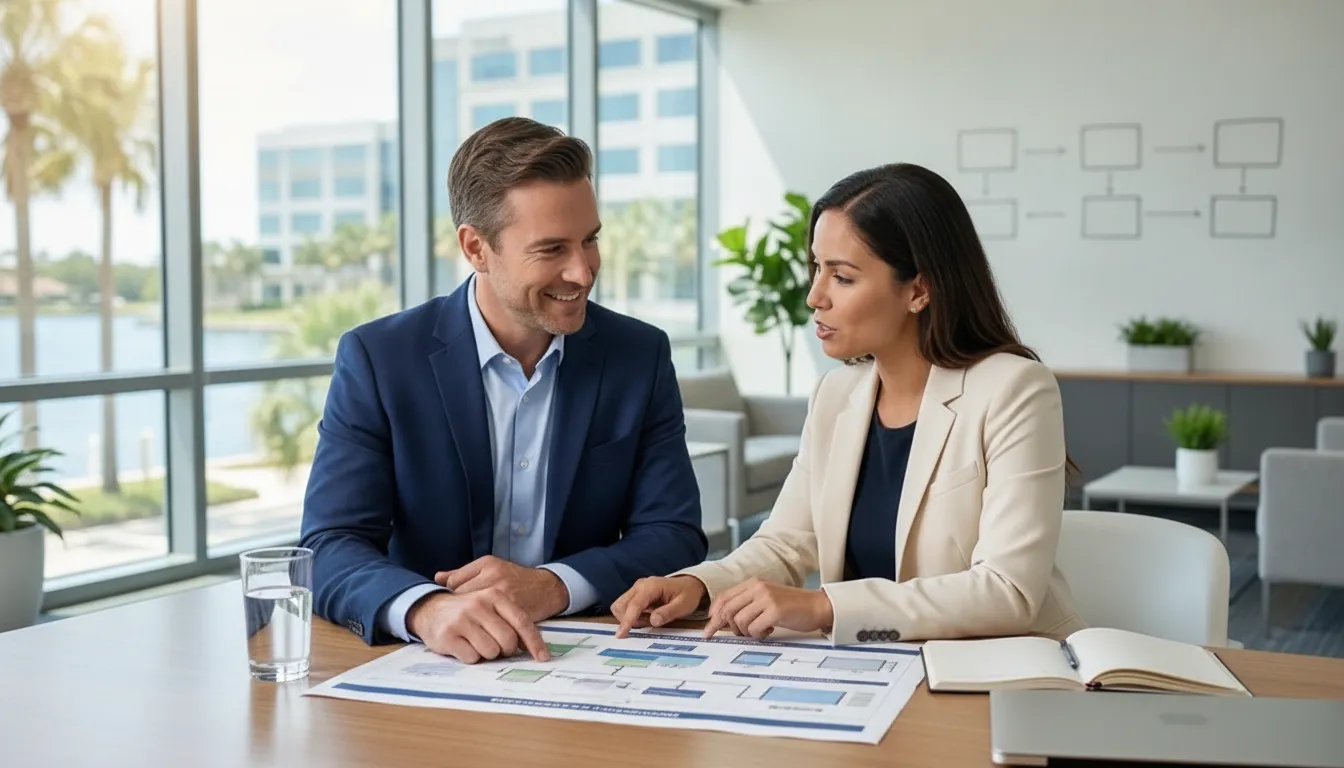
IT consulting Tampa Bay businesses hire is not the same job as day-to-day tech support. A consulting engagement answers a decision: what to assess, what to plan, what to secure, and which project is worth doing next. If the proposal only lists hours and a tool name, you do not have a plan yet.
Talk with IGTech365 about this article
Send a note and we will reply from this page.
Use this guide when you need a technology assessment, a roadmap, security planning, or a defined project. It is not a ranking of local firms, and it is not a contract checklist for ongoing managed support. Those are different buying questions. Start with the work you need done, then ask whether the consultant can show the deliverable before the work starts.
Tampa IT consulting from IGTech365 starts with discovery, a roadmap, and implementation guidance.
What IT Consulting Tampa Bay Businesses Should Buy
Buy an outcome, not a stack of hours. A useful consulting engagement names the decision you will be able to make when the work is finished. That decision might be which systems to replace, which security gaps to close first, or whether a cloud move should happen this year.
IGTech365, founded in Tampa in 2015, treats consulting as three linked steps. Discovery reviews the current setup, the pain points, and the business goals. A strategic roadmap turns that review into a plan the leadership team can follow. Implementation guidance then helps your staff, or the consulting team, put the chosen work in place. The consulting page describes that sequence as the way special projects get scoped, not as a promise that every problem is a monthly support ticket.
Four kinds of work show up most often for companies with about 10 to 150 people:
- Assessment. A written picture of systems, risks, and wasted spend.
- Roadmap. A sequenced plan that ties technology work to business goals.
- Security planning. A prioritized list of controls, not a scare report.
- A technology project. A bounded job such as a move, a migration, or a network upgrade.
If a proposal mixes all four into one open-ended retainer, ask the firm to split them. You should be able to stop after the assessment if the findings do not justify more work.
Decide Whether You Need Consulting or Ongoing Support
Consulting and managed support solve different problems. Consulting is time-boxed advice and project guidance. Managed support is the day-to-day running of systems: monitoring, patching, help desk, and a monthly plan. Many Tampa Bay companies need both, but they should not buy them as one blurry package.
Choose consulting first when you have a decision in front of you. Examples include a second office, a new line-of-business system, a compliance deadline, or a feeling that technology spend is rising without a matching result. Choose ongoing support when the systems are already understood and the gap is coverage, response, or after-hours help.
| Question | IT consulting | Ongoing managed support |
|---|---|---|
| What you are buying. | A decision, a plan, or a defined project. | Day-to-day operation of systems. |
| Typical end. | A written deliverable and a go or no-go choice. | A continuing service agreement. |
| Best fit. | Unclear priorities or a one-time change. | A known environment that needs coverage. |
| What to watch. | Open-ended hours with no deliverable. | A contract signed before anyone maps the environment. |
If you already have an internal IT person, consulting can sit beside that role. Co-managed help adds specialist time for a project or a coverage gap without replacing the person who knows the business. Read the co-managed IT page when that is the shape of the team, and use the managed service provider selection guide only after you know you want ongoing support rather than a project.
What a Useful Assessment Should Hand You
An assessment is the first deliverable, not a sales tour. Ask what will be in writing before anyone logs into a system. A useful review documents the systems and the processes that depend on them, names vulnerabilities and waste, and compares the gaps with a practical standard. It should end with recommendations tied to your goals, not a generic product list.
IGTech365 describes its discovery step as a review of the current IT setup, the challenges, and the goals. That is the right grain. You want the consultant in the server room and in the conversation with the person who owns operations. Leadership at IGTech365 comes from an operations background, which matters here: a finding only counts if it changes how work gets done.
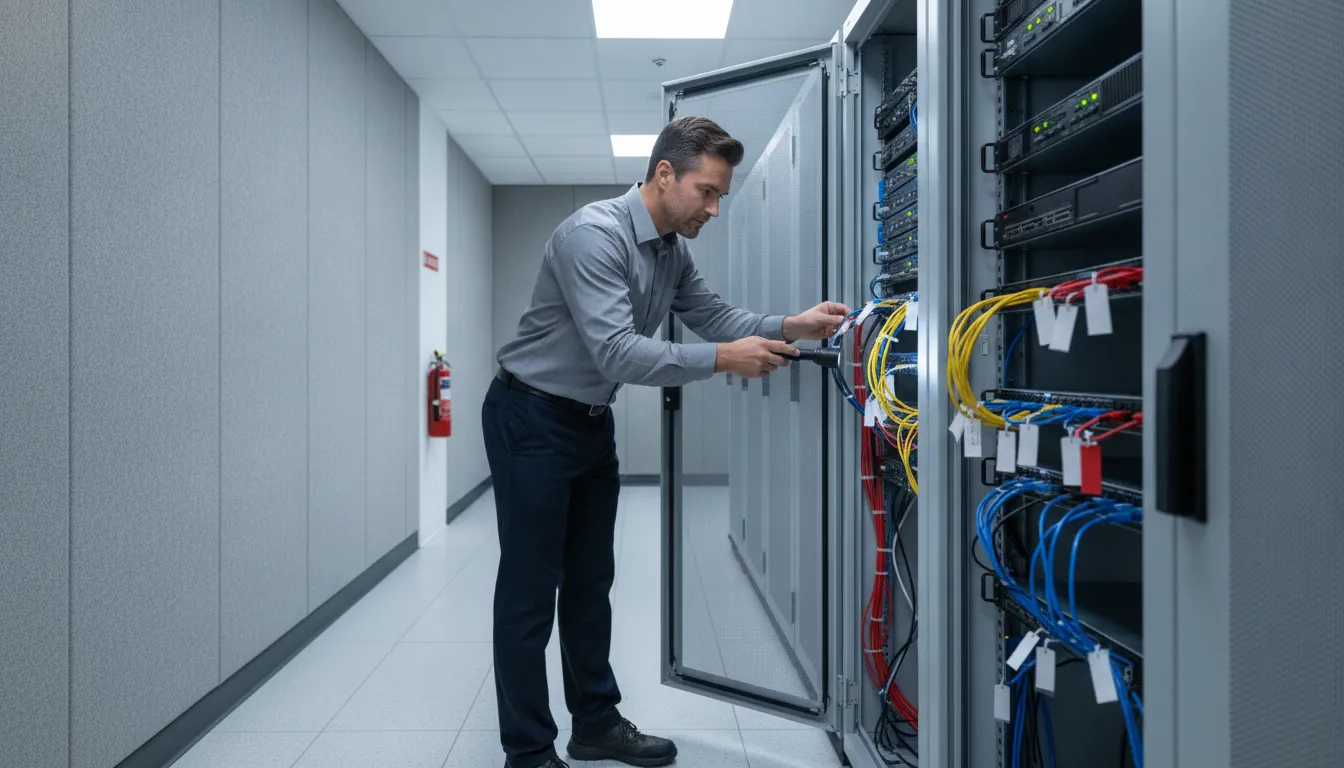
Scope the review to the decision. A network review, a security-gap review, and a full infrastructure picture are related, but they are not the same document. If you only need the network, start with a professional network assessment. If you need the wider inventory and the written report, use the IT infrastructure audit scope as the checklist of what should come back. Either way, the assessment should be readable by a non-technical owner.
Refuse three patterns. A free scan that exists only to sell a tool. A slide deck with no owner, no date, and no next step. A finding list so long that nothing is ranked. You should be able to point at the top three items and say who will act on them.
How to Judge a Technology Roadmap
A roadmap is a sequence, not a wish list. After the assessment, the consultant should say what happens in the next quarter, what waits, and what depends on a budget decision. IGTech365 frames the strategic roadmap as a clear plan that lines technology up with the business. That is the test. If the plan does not name a business result, it is a shopping list.
Ask for four things in the document:
- The business goal each item supports, such as uptime, a new location, or a compliance date.
- The order of work, including what must finish before the next item can start.
- A rough effort band, so leadership can choose now, later, or not at all.
- The owner, whether that is your staff, a project team, or a managed provider.
Growing companies often need this view across more than one budget year. A three-year technology roadmap is the longer form. A technology business review is the recurring meeting that keeps the plan honest after the first project ships. Do not pay a second firm to rebuild the roadmap every quarter if the first one is still accurate. Update it.
Pricing for consulting is not published, and it should not be invented in a proposal comparison. What you can compare is whether each firm will put the roadmap in writing before implementation hours begin. Pair that with your own annual IT budget planning so the roadmap has a place to land in the numbers.
Security Planning Without a Scare Report
Security planning inside a consulting engagement should answer one question: what could go wrong, and what should we fix first. It is not a product pitch, and it is not the same document as a formal audit your regulator named. Ask the consultant to separate identity and access, endpoints and the network, cloud services such as Microsoft 365, backup and recovery, and how people report an incident.
IGTech365’s cybersecurity work for Tampa Bay companies covers threat monitoring, vulnerability testing, firewall care. Microsoft 365 protection, and practical compliance support for the industries it serves, including healthcare, legal, and manufacturing. In a consulting conversation, you still want the planning layer first. A control that nobody can operate is not a control.
Use public guidance as the outside check, not as a substitute for someone who has seen your environment. The National Institute of Standards and Technology publishes small-business quick-start guides that translate the Cybersecurity Framework into plain steps. A local consultant should be able to map their recommendations to that kind of source, then say which step fits your size.
Two related pages go deeper than this article should. A cybersecurity risk assessment explains the deliverable and the priority list. An IT security audit preparation guide covers what a Tampa audit visit looks like. Keep those scopes separate from the consulting decision: planning chooses the work, the assessment or audit produces the evidence.
Also ask how recovery fits the plan. A security roadmap that never mentions restore time is incomplete. The backup and disaster recovery service is the operational side of that question once the plan says recovery matters.
How to Scope a Technology Project
A technology project needs edges. Name the site, the systems, the date, and what “done” means. IGTech365’s project work includes office moves, network upgrades, system migrations, new deployments, and low-voltage cabling. Those are bounded jobs. They fail when the scope quietly grows into “and also fix everything we find.”
Before you approve a project, write five lines:
- The business reason, in one sentence.
- What is in scope and what is explicitly out.
- Who approves a change once work has started.
- How success will be checked on the first business day after cutover.
- What happens to the old system, including data and access.
Cloud moves are a common example. A migration is a project with a start and a finish. Running the result afterward is a support question. Read the cloud migration page for the project shape, then decide separately who operates the environment. The same split applies to Microsoft 365 work: licensing and setup can be a project, while daily administration is ongoing care. IGTech365 is a Microsoft Partner and can speak to both, but the proposal should not blend them into one line item.
If the project will touch patient data, legal files, or a plant floor, say so in the scope. Healthcare, legal, and manufacturing are the industries IGTech365 focuses on, and each one changes what “done” means. A clinic cares about access to records. A firm cares about the document system during billable hours. A manufacturer cares about production uptime. A generic project plan that ignores that context is the wrong plan.
Questions to Ask Before You Sign
You can learn more from the first conversation than from a capabilities brochure. Ask these, and write down the answers:
- What will I hold in my hands at the end of the assessment, and who is it written for?
- Which of your people will do the work, and will I meet them before we start?
- How do you separate this project from ongoing support, if we need both later?
- What do you refuse to recommend, and why?
- How do you handle a finding that would embarrass a current vendor?
- Where do you actually sit, and can someone be on site in the Tampa Bay area when the work requires it?
IGTech365 is headquartered at 5328 Primrose Lake Circle, Suite B, Tampa, FL 33647, and serves Tampa, St. Petersburg, Clearwater, and other Florida markets, with remote support for clients farther away. Local presence matters when a project includes a server room, a wiring closet, or a cutover that cannot be done from a ticket queue. It matters less for a written roadmap review. Match the visit to the work.
The team is small, about eight people, and the service model is built around named staff rather than an anonymous queue. That is a fair thing to test. Ask who answers if the lead consultant is out. A firm that cannot name a backup is a firm that will disappear mid-project.
Skip any proposal that leads with a competitor comparison or a guaranteed savings percent. IGTech365 does not publish consulting prices, and a serious firm will scope the job before it quotes. Flat-rate monthly billing belongs to managed support, not to a one-time assessment. If someone quotes a monthly fee before they have looked at your environment, you are in a different sales process.
Talk with IGTech365 about the assessment or project you actually need: (866) 365-7798.
Frequently Asked Questions
What should IT consulting in Tampa Bay include?
It should include a defined decision, not an open stack of hours. Expect a discovery review, a written roadmap or project scope, and guidance on how the work gets implemented. Ask for the deliverable before the kickoff.
How is IT consulting different from hiring a managed service provider?
Consulting produces a plan or finishes a project. A managed service provider runs the environment on an ongoing basis. Many businesses need both, but the proposal should say which one you are buying. Choose ongoing support only after the environment is understood.
What does a cybersecurity consulting engagement actually do?
It identifies practical risks and ranks what to fix first across identity, devices, cloud services, backup, and incident reporting. It should not stop at a product quote. Use a separate risk assessment or audit when you need formal evidence.
Do Tampa Bay businesses need a local consultant on site?
On site matters for server rooms, wiring, office moves, and cutovers. A roadmap review can often happen remotely. Ask which parts of your project require a person in Tampa, St. Petersburg, or Clearwater, and which parts do not.
When should we stop and just request an assessment?
Stop when the proposal will not name the deliverable, the owner, or the boundary of the project. A short assessment is cheaper than a long engagement pointed at the wrong problem. You can decide on the roadmap after you have read the findings.
Start With the Decision, Then the Partner
You do not need a directory of Tampa firms to make a good technology decision. You need a clear assessment, a roadmap you can fund, security work in priority order, and a project with edges. IGTech365 builds consulting around that sequence for Tampa Bay companies, then stays available if the next step is ongoing support.
Bring the decision you are stuck on. A 15-minute call is enough to tell whether an assessment is the right first step.
Request a consult with Tampa IT consulting or call (866) 365-7798.